Sydney Rd, Cheap Eats Capital of Melbourne

SP_A0150.jpg

SP_A0148.jpg

SP_A0147.jpg

SP_A0133.jpg
aaahhh Brunswick, Melbourne in the spring....feel the searing heat of an ozone free sun pierce you delicate asian skin

sit under a fig tree while your very own Jewish hostess, Fluffy, cooks you bacon and eggs on the barbie, served with spinach, babaganoush, tahini, pesto on a piece of toasted turkish bread. Move over Nigella here comes Fluffy with her exquisite aussie, turkish, jewish, lebanese Melbourne bbq mix up.

Sit and watch the tomato plants grow and pretty blonde haired children pluck the first ripe strawberries....it's all overwhelmingly exotic for me right now


SP_A0127.jpg

SP_A0124.jpg

SP_A0128.jpg

SP_A0132.jpg

SP_A0131.jpg

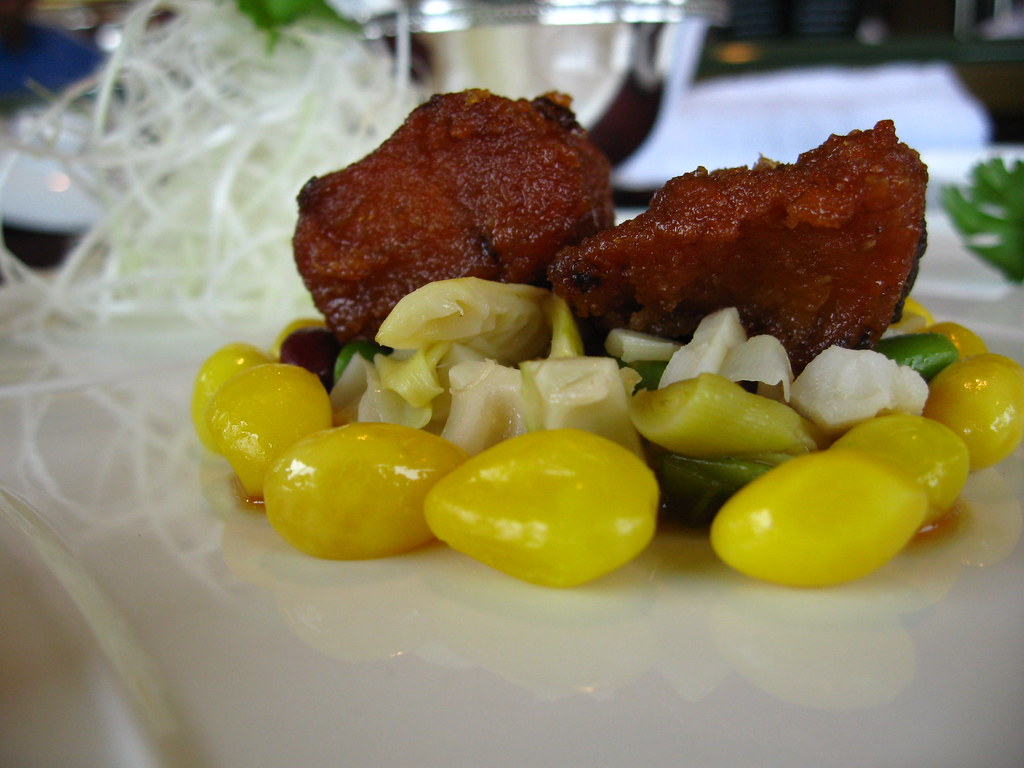
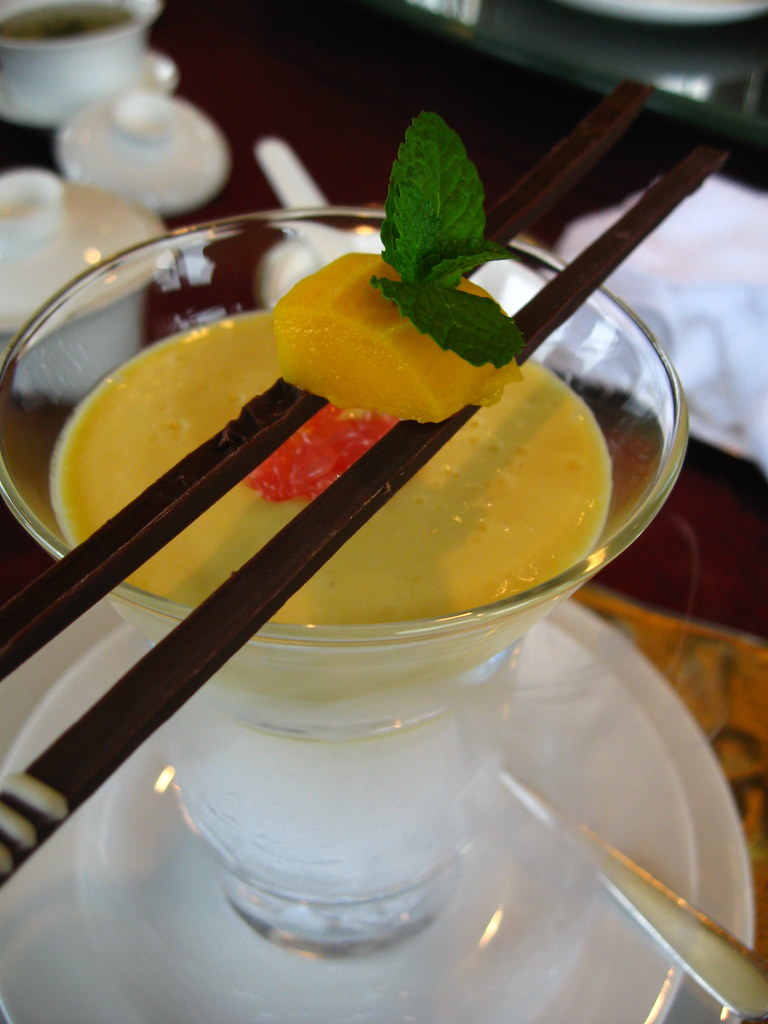
Shanghai Foods

A Hotel-spin on Shanghainese food.

I think those yellow nuts are Gingko

Really, I was just fiddling with the macro function on my IXUS


Ice Cream Castle Pt 2

Photo Sharing and Video Hosting at Photobucket

Just to prove it's not all eat & no work,

Here's a page from a gig guide produced here at the Academy in Toronto (written by trusty cohort Max Cole aka Moxo Tengu - listen to his track Cookie Jars by clicking the link)

Some of the participating DJs and producers described as ice cream flavours, with tongue firmly in cheek...

Ahmm... slap-stick humour??

Ice Cream Castle

Posters in Cobble Hill, Brooklyn:

Photo Sharing and Video Hosting at Photobucket

Photo Sharing and Video Hosting at Photobucket

Sex on a stick huh?

What Is Knish?

Photo Sharing and Video Hosting at Photobucket

Yiddish has some excellent sounding words. Some of the coolest sounding words from the German language surface in Yiddish, in slightly unfamiliar shapes since they're descended from old or regional forms and sometimes given new meanings entirely. Schmalz, schmuck, schlep. 'Knish' is one of the awesomest sounding Yiddish words (but it probably doesn't come from German). A shame, though, to order a sweet potato knish at the renowned Katz' Deli and for them to microwave it front of one's eyes. That's just knot very knice.

It didn't taste too bad, though.

Photo Sharing and Video Hosting at Photobucket

We liked how a sign at Katz' advertised "A Piece of Stukel" ("Stuck" in German means a piece).

Photo Sharing and Video Hosting at Photobucket

I am aware that many people revere Katz' as the best pastrami ever, but I'm afraid I preferred the taste of the kosher pastrami at the (currently closed) 2nd Ave Deli. Katz' is not kosher, and to add to the microwaved vibe, it's packed with tourists.

Photo Sharing and Video Hosting at Photobucket

The pastrami was buttery and fell apart in the mouth, but in my stubborn & ill-informed opinion, 2nd Ave Deli sandwiches tasted better. And they were so big there was no way you could finish a whole one.

Also, at 2nd Ave Deli you could get sweet peppers in your sandwich. Katz' doesn't have them. The 2nd Ave Deli matzo ball soup was a revelation, a work of art (I have the recipe in a NYC recipe compendium back in Germany, will post when I get back); whereas Katz' matzo ball soup looks very pedestrian.

My final complaint is that Katz gives you ONE measly half-sour pickle split in half. The 2nd Ave Deli would give you a whole bowl full.

Sorry for kvetching ("kvetch" means to complain chronically in Yiddish; "quetsch" means to crush something in German. We don't know if there is any etymological connection; it would be nice if there was, though).

The great news is, as the NY Times recently reported, Jack Lebewohl, whose family owned the Second Avenue Deli for decades, said his son Jeremy would reopen the deli in Murray Hill — on East 33rd Street, between Lexington and Third Avenues — “sometime in the fall.”

Mr. Lebewohl expects a fair few tourists to come to the new 2nd Ave Deli too, recalling a man who once entered the deli and exclaimed, “I smell Judaism.”

Photo Sharing and Video Hosting at Photobucket

The hot dog at Katz' was fine: a hot dog, in a soft bun gobbled up in about 5 seconds since half the digestion is done ahead of time, ya know.

The best thing I had at Katz' was a sample of the strong, tasty Knoblewurst (garlic sausage; 'knoblauch' is garlic in German), which one of the servers shaved off for the lady ordering her sandwich ahead of me. If I ever go back, I'll take a Knoblewurst-on-rye. But hopefully the 2nd Ave Deli will have reopened by then.
MySpace Codes


Regrets, I've had a few
But then again, too few to mention
I did what I had to do, and saw it through without exemption
I planned each charted course, each careful step along the byway
But more, much more than this, I did it my way

OK, when it comes to our dining choices in NY I pretty much did it Sietsema's way. And in one particular case, it may not have been the BEST way. There was a tinge of regret when I made the mistake of checking up on Oversea Asian on Chowhound.com. On that website, the legions seem to prefer another Manhattan Malaysian joint. Which lead me to wonder for a moment, if I should've done it Skyway.

But then I thought back on the delicious sweet-sour mango chicken, the flaky, buttery roti canai (so it probably is pre-frozen, so what?), and the melange of nasi lemak flavours and I was at peace.

Photo Sharing and Video Hosting at Photobucket

It IS still a lingering regret that we didn't have time to explore Sietsema's recommendations of Malaysian and other 'asian cuisines in the outer boroughs. I have a certain stubborn idea (similiar to Maytel and Hock's) that restaurants should be humble and obscure, that the 'real' and best Asian food would be found only in Queens or even New Jersey and never in Manhattan. (I have Sietsema to thank for this prejudice, too). So I have shovelled all regrets aside, since i figure Skyway is just another Manhattan joint, after all...

Must admit, I do find it bewildering and somehow irritating to broach the seething mass of conflicting ideas on Chowhound about which restaurant is 'best'... most of them write in a way that is so earnest and humourless and often seems so ill-informed.

Still, one is inclined to think that some of them must have a good idea about what's good to eat.

The brave legions of Chowhound posters have quite a task on their hands. In NYC (as in Tokyo) there are SO many places that are good to eat. Some of them are only good for one or two dishes, and some of them decline in quality within months while new ones pop up every day.

To try to define what is 'best' is a virtual impossibility, because when there are so many options, 'best' depends on what you feel like that day, doesn't it?

I found this blog whereby a person spent a year eating their way around the world, and then summed up their top fives in various categories. Some of the places and dishes sound worth trying out, but the lack of scientific approach and the profusion of locations and cuisines makes it all seem rather random. Since it could take decades of living in a certain country to become an expert on a cuisine, it is bewildering to see someone try to come off like an expert on Napolitano pizza just from having passed through there for a week or two. This, dear friends, is the nature of our day & age. Foodism, dear friends, is at work everywhere you look.

Anyways. No matter how you get your info, the main point is to find delicious meals.

There are two options in a big city like NYC. You could spend two weeks blocking out all the eateries from a certain cuisine and eating your way through all of them. Or you could make a virtual career out of trialing places that you've seen recommended on the web. For instance, I found this site by an enthusiastic eater who made a shortlist of places she wanted to try out in NYC culled from Sietsema's recommendations - and then cross-referenced with Chowhound and a cabbie food-blogger. I must say that we enjoyed every single meal recommended by Sietsema. But I suspect - foodism irritations aside - that if I lived in NYC I would resort to a similar strategy.

OK, so enough rambling. I am NOT an expert on Malaysian food. For some reason there is a lot of really good Malaysian food in Wellington, NZ, where I grew up. As take out it's more of a tradition among people I knew than Thai or even Chinese, so it reminds me of being 16 and eating searing egg sambal.

One of the things that impressed me about Oversea Asian was the freshness and tastiness of the vegetables that were involved. Mango chicken:

Photo Sharing and Video Hosting at Photobucket

Photo Sharing and Video Hosting at Photobucket

I wished the Nasi Lemak had been a bit less dry & a bit more coconutty (like the superb coconut rice we had at Village Mingala the night before - but that was a Burmese restaurant so I shouldn't confuse the matter! The achat (sweet/spicy/sour pickled veges) that came with it were great and the general confluence of tastes and textures was very satisying.

Photo Sharing and Video Hosting at Photobucket

Above you can see Yeong Tofu, the dish that enticed us to Oversea Asian in the first place. Here is the description by Sietsema:
"It might be the name of a prime-time soap, set in an organic supermarket and featuring a cast of glib twentysomethings: Young Tofu. Instead, it designates a clay pot that sits steaming in front of you, a collection of stuffed objects in a curried coconut broth ($5.25). Bulging with shrimp-laced tofu paste, the okra, eggplant, and long green chiles sink to the bottom, while Venetian barges of fried and unfried tofu float lazily by. This liquid museum of curd would have made a complete meal in itself, had the bewildering, 150-item menu not tempted you to stick your neck out further."
(Read the full review here: it's from '04, mind)

The crispy fried tofu skin with the creamy broth was superb. (We chose half chicken broth and half laksa-style curry mixed). 'Yeong' in cantonese means to stuff. So Yeong Tofu means veges stuffed with tofu, and the dish also included pieces of eggplant welded with fishpaste that tasted a little musty like the back of the shelf in an old chinese supermarket: but in a good way.

Photo Sharing and Video Hosting at Photobucket

The roti canai was very good, the accompanying curry with hunks of meat very tasty.

Overall, it was a delicious and over-the-top lunch (so much food!) washed down with plenty of tea and nice before strolling to Alife so Erik could buy a purple sweater.

It may not have been THE best Malaysian NYC has to offer, but it was very good, and it made me wish there were more Overseas Asians in Germany. I would be very happy if this restaurant existed in Cologne.

As a point of consolation for those of us who don't have the option of being in close proximity to the Italian food of the Bronx, the Asian spots in Queens and the Latin American food of Jackson Heights simultaneously, I just read the following inspiring comment by one Malaysian blogger:
"I used to drive 5 hours to find good Chinese or Singaporean or Malaysian food. Now I prefer to spend 5 hours preparing it myself."

If you, too, feel a dearth of Malaysian food in your life, this is a recipe for Yeong Tofu. Give it a shot!

A customer contemplates the qualities of a good nasi lemak:

Photo Sharing and Video Hosting at Photobucket

Korean BBQ Stakes

Alrighty then, seems as Gut Feelings is going with an impromptu Korean theme, I'll see you your genuine kimchi and mandu dumplings and raise you a korean feast in little korea, Bangkok


So far the best Korean BBQ we have found in Bangkok. At the front of Sukhumvit Soi 12 there is a whole plaza full of Korean BBQ joints. Hock and I have a tendency to think that the best food is always found in the most obscure places, but in this case our instincts were wrong. We ate our way through all the shitty restaurants at the back of the plaza only to discover that the best one is right at the front of the plaza on the right hand side.

It's called Arirang....there's nothing original about the restaurant or the name...but it does what it does do well.

P1110363.JPG

P1110368.JPG

P1110376.JPG

P1110370.JPG

P1110380.JPG

P1110389.JPG

P1110409.JPG

P1110406.JPG

Mandu in Insadong, Seoul

mandu, insadong
Making fist-sized mandu (dumplings) in an alleyway in Insadong, Seoul.

Will the real Kimchi please stand up

MySpace Codes


While browsing through this site's tracked google referrals for the first time, I came across this essay on the bubbling resentment of straight-up Korean kimchi makers towards Japanese manufacturers, who apparently now dominate global kimchi exports.

I became quite taken with the Japanese version of kimchi when I lived there – it's very easy to eat, very more-ish. It is more likely to resemble the milder forms of Korean kimchi, and often has a slight sweetness, which seems to be taken as an affront to Kimchi purists. Now I discover from the above article that Japanese kimchi is often (shock) not fermented!

Koreans want to impose an international Kimchi standard, which in line with the national Korean saying, should perhaps entail stickers saying "tastes like your mother's fingertips".

Explosive Attributes

Exporting large volumes of such a volatile substance as Kimchi must be dangerous though: we sometimes buy aluminium bags of white kimchi from a korean/Japanese market in Duesseldorf, which contain sachets of a fume-absorbing substance. Once one of these sachets malfunctioned and with trepidation we decided to pierce the dangerously ballooning aluminium bag, taut from all those fermentation gases. Luckily the bag did not explode all over the kitchen, but you can imagine the wonderful odor that clung to us for the rest of the day: "she must be wearing Impulse". Inner energy aptly describes a contained kimchi gaseous cloud.

Like other pickles/preserves, Korean-style Kimchi can be eaten at varying degrees of fermentation (for example, it can be eaten within hours or even seconds after first salting it). However, the longer you leave it alone, the more it is going to ferment – which means that any contained vessel of true Kimchi will attain explosive attributes if it sits on the shelf for long enough.

Recently I've been experimenting with making my own Kimchi - it's quite miraculous how such a simple preparation can yield such complex flavours. I've found that I enjoy quite a mild preparation with a shitload of garlic and spring onions, eaten while still at the crunchier end of the sliminess spectrum.

You can make kimchi with all kinds of vegetables, from cucumbers to soy bean sprouts to radish, turnip etc.

Kimchi Lineage

The fermentation process is important though, to produce the probiotic qualities of true kimchi. Kimchi, like German sauerkraut, is descended from Chinese kimchi, which was cabbage fermented in rice wine. According to one site, it was eaten about 2000 years ago by the men who were building the Great Wall of China.

According to some sources, sauerkraut owes its origins to Genghis Kahn, who after plundering the Chinese brought the recipe for Ji or Kimchi to Eastern Europe. The Europeans eliminated the rice wine and used salt to ferment. A century or two later, the introduction of red pepper to Korea by Spanish and Portuguese traders (at roughly the same time it was introduced to China and Japan), in the 17th century, brought a major innovation to kimchi and to the Korean diet in general. Maybe we should put down our weapons and accept that it's one big global kimchi party.

Rotten Probiotics

Most store-bought sauerkraut I've eaten in Germany does not have the riper fermented attributes of store-bought korean kimchi, so one would assume, it contains less probiotic substances.

Of course, one could make kimchi at home and eat it before it ferments. In general though, korean kimchi made from cabbage seems to be more volatile than Sauerkraut when packaged on the supermarket shelves.

Here's what thenibble.com says about the probiotic qualities of pickled cabbage – as you'll see, there's also some controversy over what consitutes real sauerkraut:

"Whether it’s sauerkraut in Germany, kimchi in Asia (especially Korea), cortido or curtido in Central America, or choucroute in France, fermented cabbage is consumed wherever cabbage itself can be grown. A head of cabbage can be sliced before fermentation, but it may also be left whole. Unlike probiotic-containing foods that start from a dairy base, cabbage does not need bacteria added to it to begin the fermentation process. All you need to add, in fact, is salt (the addition of vinegar is looked upon with contempt by makers of “true” sauerkraut, who declare that it’s used only by those who don’t take the time to go through a full fermentation process and want a cheap and quick way to achieve acidity). With the correct level of salinity (about 1.5%) and at a proper temperature (temperature is important to every fermentation process–just ask your local brewer!), the cabbage will ferment. Several different bacteria will be at work during this process, as you might expect, and those bacteria change as the acidity of the brine surrounding the cabbage increases. The most commonly cited probiotic associated with sauerkraut is Lactobacillus plantarum. Many fermented cabbage products commercially available have been pasteurized; such treatment with heat will destroy any friendly bacteria.

If fermentation was not halted, the sauerkraut containers would swell or explode; (...) any active fermentation process will produce gases. The preservative sodium benzoate, often added to sauerkraut and other fermented vegetables, will also kill friendly bacteria. Any of these brands (or any others) must be in refrigerated form if you’re looking for live cultures, and check the label to make sure no sodium benzoate has been added."

I have checked out the supermarket-available brands of sauerkraut here in Germany and most do contain additives. We have had a foil package of sauerkraut (the own-brand from the organic store Biomarkt) in the bottom of our fridge - and the ingredients are listed as only white cabbage and salt. But that packet has been sitting in our fridge forever and it has not swollen, even a little bit. In fact the date stamp says it will be good until March 2009...which means a shelf life of approximately 2 years?? That organic sauerkraut simply must've been pasteurised in some way shape or form...

Sleeping with the enemy

Getting back to the taste of kimchi, rather than the funkiness- or healthiness-quotient: when a trip to Duesseldorf for a dangerous, smelly pottle of store-bought fermented kimchi is not possible, and I haven't had the time to chop up soya sprouts, daikon, cabbage leaves and salt them and mix them with chilli powder and garlic, we rely on a gas-free Japanese brand of 'kimchi base' sauce. Rather like the 'Heinz ketchup' variety of kimchi, it keeps well in the fridge and can be utilised to make instant kimchi-flavoured chopped cucumbers, crunchy but pungent and delicious when eaten with good short grain rice. A very satisfying meal in itself, and also excellent with Japanese-style burgers. The base of course is also great added to hot pots and so on.

Turns out I quite like the flavour of artificial food additives, citric acid and xanthan gum.

MySpace Codes
For further proof of why Lynn Yaeger (and by association, the Village Voice) is brilliant:

Read Yaeger's column on cheap coats and a creepy new dieting recipe book.


I can't believe there is a book called Skinny Bitch in the Kitch! haha!

Now your favourite neurosis follows in the footsteps of TIGI haircare and a swathe of American drinks and packaged goods to come bottled with FUN gumdrop-style slogans like 'PMS' - Pissy Mood Snacks.
Photo Sharing and Video Hosting at Photobucket

We did really well on this trip to NYC, all thanks to Village Voice restaurant critic Robert Sietsema. Nary a bad mouthful passed through our gullets. The only sadness was that we couldn't manage to eat two big main meals per day.

A definite highlight was Hill Country Barbecue, located a block west of Madison Square Park, in a block that at night time is dark, stark and does not feel that it will offer up any delights. However, it does.

Read Sietsema's admirable review of Hill Country

If you can stand the fact that Hill Country is a loud, brash, almost Disneyland-ish BBQ experience, you will love it. We actually saw a father & son arrive for dinner in ten gallon hats. Hill Country is styled after the beloved Texas Kreuz Market, right down to the bathrooms downstairs which are fitted out to resemble wooden outhouses (within a separate Ladies room of course). There was NFL playing on TV screens, loud music on the sound system, and a gimmicky system whereby you take your order card to the 'stalls' of the barbecue 'market' and when someone shouts to you that you are next in the queue of (mostly white) customers, you shout to the (mostly African American) 'pitmasters' that you would like a quarter pound each of lean brisket and moist brisket with white bread (scrupulously following Sietsema's directive), and they pull out smoky meat from black iron-lidded brick holding bins (the hulking metal Ole Hickory pits, each of which has a smoking capacity of 1000lbs of meat, are visible beyond some glass doors), and plopped onto a twist of butcher paper on a plastic tray. Then you get your sides from the next stall, then you pay at the cashier. If you want to get a table in the pleasant noisy warmth upstairs or at the long communal tables downstairs, where the bands play and where there are happy hours for Jack Daniels, you're best to book. There seem to be some nice music booked there, like The Poor Man's Roses, a Brooklyn-based Patsy Cline tribute band. We were able to get a table on the street right away without a reservation, which was fine for us, though the mix of NYC hubbub and Texas smells inside would be worth booking for. The black-people-serving-white-people thing made me a bit uncomfortable but everybody seemed pretty happy with their jobs and the atmosphere was nothing less than congenial.
The ordering system was quite hectic and we were glad to know ahead what we should choose.

We loved the moist-and-lean brisket eaten together on white bread, so soft, greasy, smoky, floppy-tender and delicous. Unlike any beef experience we'd ever had. The pork ribs were better with a little of the sauce in the bottle at the table.

Photo Sharing and Video Hosting at Photobucket

The corn pudding was indeed wonderful. A savoury sort of souffle with a deep corn flavour and touch of sweetness from the corn with slightly crunchy crust, we agreed with Sietsema that it was the best of the sides – Erik also liked the skillet corn bread though I found it too sweet and tasted somewhat of baking soda. I did also like the sweet potato mash with bourbon.

Photo Sharing and Video Hosting at Photobucket

Looks like baby poo, tastes delicious. I am a maniac about almost anything involving sweet potatoes, though, and most things with a sloppy pureed or mashed consistency. The Cool As A Cucumber salad (ordered as a gesture towards green food) was ok. Beware of ordering too much... it might not seem like much, but a half-pound of meat plus one side is more than enough per person... I wished I'd had room for the peach & blackberry cobbler.

What heaven looks like:

Photo Sharing and Video Hosting at Photobucket

Photo Sharing and Video Hosting at Photobucket

Hill Country
30 West 26th Street
(212) 255-4544

More photos of Hill Country, including the Ole Hickory pits.

Birthday Parties For Boomers

On Sunday we cooked my pops a special birthday dinner. He tunred 57 today. Happy Birthday Pops. We were going to take him out to a fancy schmancy hotel restaurant but I then realised that given that I am married to one of Bangkok's finest chefs and master of all things sous vide, we decided to make a little party at home instead.

Its pretty easy to please a baby boomer, you just have to pull out as many old school cordon bleu stops as you can and dose them thoroughly in wine. Set the table properly to add extra atmosphere. I even ironed napkins.

P1110433.JPG

To start Chef prepared a platter of smoked salmon (which Dad had actually bought back from New Zealand...he left all his clothes in New Zealand and arrived back with an entire suitcase of our national bread vogels, fruit and salmon) with accoutrements...it actually goes really well with dill and kewpie BTW
P1110428.JPG

Main course was an enormous wagyu steak with enormous slices of foie gras on top, dosed in tarragon, prune eau de vie and green pepper corns, served with baby potatoes and brocollini. The first time I had ever seen anyone eat such a thing was Christmas in Cambodia, when Chef J.LO smothered his celebratory steak with sous vide foie gras and proceeded to giggle the entire time he ate it. It seemed to have the same effect on my father....I personally couldn't finish mine, as it was far too rich.
P1110438.JPG

Noticeably absent from our dinner was my step mother, who doesn't eat beef due to a long standing Chinese belief that the evil father of Guan Yin (Goddess of Mercy) was supposedly reincarnated as a cow. Like a small number of Chinese she wont eat beef out of respect for the Goddess. She also doesn't drink much or eat a lot of cheese.

P1110451.JPG
"What's in a name? that which we call a rose
By any other name would smell as sweet"

Rose Apple
P1100842.JPG

P1100850.JPG

And maybe it does kinda look like a rose but I tend to think more that it looks like a baboon's ass.

Baboon's Ass Apple.

f943b81a.jpg

Would you eat it?

Blogger Templates by Blog Forum