Showing posts with label Food Safety. Show all posts

Core Principles of the Archimedes Turkey Theory


Thanks to Andy for this.

Raw Oyster Malevolence

I just read this cute blog on Blue Lotus about a person who has never liked raw oysters, trying one fresh in Hokkaido and becoming a convert. I like this story. I like it when people try something new and change their opinion. It always fills me with hope.

Except I know if I was her friend and there with her, she would probably still hate oysters. This is because of the way I embarrass and harangue people into trying new food.

I'm a bit of an old nasty hag, you see. I know that.

I recently berated someone I like very much for never having eaten a raw oyster. Our common friend had a dinner party and bought fresh oysters which he shucked himself. A real treat. I happily downed my allotted two and then turned to my friend D and enquired as to why he wasn't eating them?

"I've never tried them before"

"let me guess, you grew up in some inland rural town of Australia"

"yes" he said relieved that I understood that raw oysters were not native to him

"yeah, but you're 31 now and how long did you live in Melbourne? I'd understand if you were 18 and fresh from the bush, but goddamit your 31 and you still haven't even tried one? What the hell is wrong with you"

So then, ummm, yeah. He tried one. I patted him on the back and he gave me a look like I am evil.

I know I am. I like to point out people's sore points, give them a hard time, see if they'll crack under pressure. If I had not said anything maybe he would have tried one, decided he liked it and ate another. But having eaten one under such trying conditions, I'm sure that he was left with a bad after taste, raw oyster or not.

I guess that makes me a not very nice person.

But really the story of raw oysters and me is not really a very nice one to begin with.

I was eating oysters in the womb. I kid you not. My mother reckons that when she was pregnant with me she constantly craved raw oysters, even though she herself doesn't like them. Nonetheless she gouged on them, swearing it was me demanding them. Pregnant women are not supposed to eat raw oysters, or raw anything for that matter as a bad one can give you such violent food poisoning that it can kill your baby. So perhaps I was so demanding of raw oysters in the womb that it was impossible to resist, or maybe she was trying to abort me from the start. And given that my mother and I have never really gotten on, I sometimes think it was possibly a little of both.

Sometimes I like to think being fed raw oysters in the womb has given me some sort of bad raw oyster immunity

Today, happily alive and blogging, my raw oyster fetish continues unabated. They haven't killed me yet. However on a recent trip to Sydney to see my sisters, I'm now a little more wary of the true dangers of oysters. As per family tradition, we all trundled down to the Sydney Fish Markets and I bought five dozen oysters. 3 trays of Sydney Rock oysters (small and sweet), and 2 trays of pacific (larger and salty).


oysters


They were pre-shucked. It was the last day of the Easter holidays. We ate them and a few hours later my little sister was in agony out both ends.

I stayed up the entire night with her. Bought her glasses of water and kept a watchful eye to make sure she didn't cark it. She survived the night and the next morning was driven to the airport, placed in a wheelchair and flown back to New Zealand.

She has made a full recovery, but is unlikely to eat a raw oyster for a very long time.

I'm so glad that it wasn't her first time eating an oyster. I'm glad that she wasn't my friend D and that on top of being harangued into eating an oyster he wasn't nearly killed doing so.

I swear to the Flying Spaghetti Monster that the next time I tease someone into eating something they've never tried it will be fresh, cooked and unlikely to kill them.

Food Quote: Stomach vs. Chicken in Prey Veng

“When my chickens die, I also use them for cooking,” he said, “because I think my stomach is more important than the influenza virus.”


Source: Ki Media

The Heimlich Manoeuvre

I was reading the guardian food blog again today, my new favourite food blog (can you tell I am in Canberra alone trying to finish my thesis?) and I was reminded by this article on the Heimlich Manoeuvre about Eddie Izzard's comedic sketch on it. It's an oldie but a goodie


I tried to find some stats on the number of people who die each year from choking on food but all I discovered is that in Britain

"People who live in Morpeth and St Albans East are more likely to die of food choking than in other parts of the country"

and that in Salt Lake Valley 2800 people, mostly children, die from choking per year.

Be careful out there folks

I always preferred Wendy's


This from the consumerist

The results are in.

beer

I laugh in the face of Gout.

beef

Though the Doc informs me I will without a doubt have the pleasure of getting gout when I am older.

Something to look forward too.

In the meantime bring on the brewers yeast and pigs liver.

Hock's Gout Diet

Hock has gout....which is a strange sort of arthritis that runs in his family. It comes from having too much uric acid in your blood which builds up and forms crystals around the joints causing shooting pain. It most commonly occurs in the big toe, which is exactly where he has it. If left untreated it can be disabling. If you seek treatment early and get the right medication it can be managed. Medical wisdom says that gout suffers should stick to a diet full of low purine foods (purine, the substance in food that is linked to higher uric acid).

As gout is a disease as ancient as the hills there are a lot of old wives tales that surround this ailment. Thus most of the websites we have been looking at tend to contradict each other quite considerably

A few foods however seem to be unanimously agreed upon as no nos for gout getters

- mushrooms
- spinach
- offal (most types)
- small oily fish
- young green vegetables
- cauliflower
- a lot of pulses
- whole wheat bread
- shellfish/ fish
- most meat
- asparagus
- beer
- roe

Yes, all those foods that are supposed to be good for you

Apparently low purine foods include

- white or low fibre bread
- highly refined foods
- rice
- gelatin
- sugar and soft drinks
- any type of yellow / orange vegetable (oranges, pumpkin, carrots, peppers)
- caffine
- dairy
- eggs

everything else falls somewhere in between

trouble is that if Hock stuck to a low purine diet I think he would end up with a whole new set of diet related problems, diabetes comes to mind

So for now he's just cutting back on beer and a few other high purine foods (although the other night when we had a japanese kaiseki meal that included a wagyu and vegetable course he off loaded his asparagus onto me and kept the beef)

This week I'm gonna start trying to navigate his new dietary restrictions better.

So far gout friendly meals planned include

- chickpea patty burgers
- cold udon salad noodles
- vegetarian fried rice
- pasta

any gout recipe tips would be appreciated

Connect the Dots

This week Phil brings us a story about banana pancakes as harbingers of mediocrity

More ominously The New Yorker explains why the global food market is about to collapse , which it blames it on the over production of mediocre food.

Given this I thought I should also include their witty ruminations on hang overs, because the previous article may lead you to drink

When you recover from your hangover you might want to get serious and check out some sites on survival gardening, alternately also called armageddon gardening and/or defensive gardening or hardcore homesteadingbecause according some of the opinions expressed in the NY article, you may as well get a head start if you're going to be forced back to the farm anyway

Which may not be as bad as you think because at least you'll be able to brew your own which brings us neatly back to hangovers

Hangovers are probably as old as alcohol use, which dates back to the Stone Age. Some anthropologists have proposed that alcohol production may have predated agriculture; in any case, it no doubt stimulated that development, because in many parts of the world the cereal harvest was largely given over to beer-making


So nothing to worry about really, so long as you master hardcore homesteading your food will mostly taste better and if it doesn't you'll be too drunk to notice anyway

Home Made Pasta

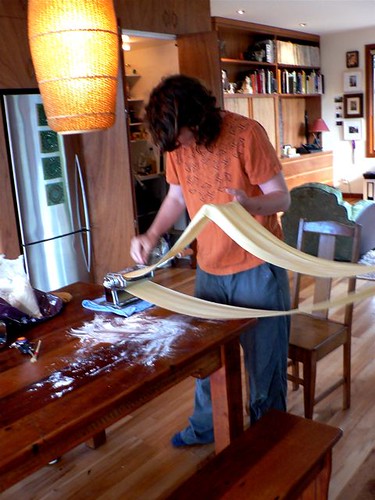
It was a lovely warm easter weekend in New Zealand, and out in West Auckland an informal home made pasta lesson took place. "It's easy" said Hock in the kind of way that Jaimie Oliver says things are easy and really they are time consuming and difficult.

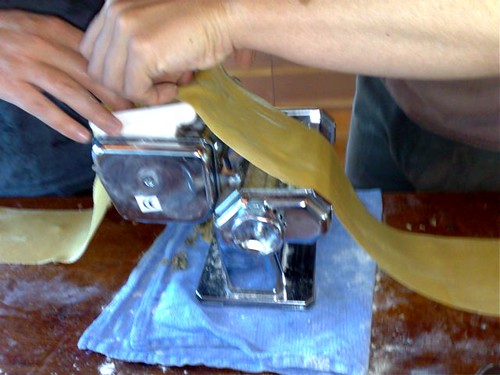
pasta rolla

With Hock over seeing, G&G rolled it and folded it and rolled it again, and when at first they failed...they tried again

pasta don't panic

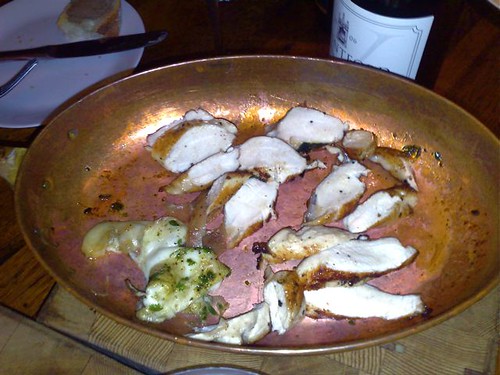
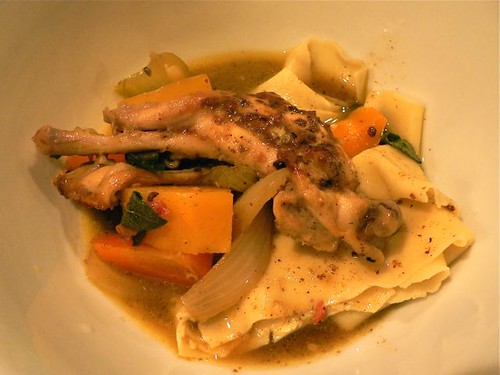
First homemade pasta dish of the weekend involved our dead easter bunny....Hock and Ginny took charge of this. First they pan fried the loin and the kidneys, then they made a stew of rabbit, bacon and tuber veges with a light white wine and sage sauce. They served it with fresh "beginners home made pasta" parpadelle

Rabit loin

Braised rabbit pasta

And we drunk it with some damn good NZ wine.

More crap wine


Later that weekend the lesson continued and G&G graduated onto the ever tricky ravioli, stuffed with chicken. Hock pronounced, as resident chef, that the "ravioli must be sealed properly with no air bubbles otherwise it would split and we'll end up with a gruesome bowl of boiling water with bits of broken up pasta and poached mince meat."...He said and everyone looked horrified and set about double checking the ravioli for air bubbles and broken seals.

"Ravioli is difficult, that's why in the 1990s there was that time when everyone made one big ravioli, because making small ones is annoying and often disasterous".

pasta gnocchi

But of course, it's not exactly rocket science either
pasta gnocchi good

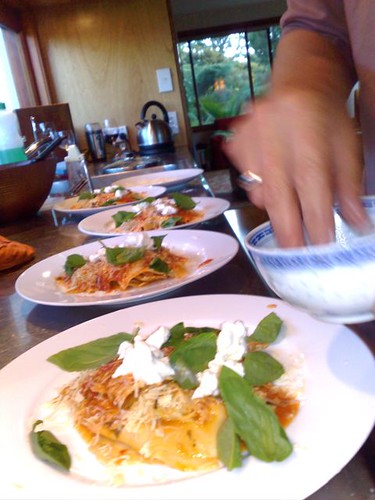
We put basil, roasted tomato, mozzerlla and parmasan on top, well they did...I watched and drunk wine and complained about being hungry. Then they heated it in the oven, just enough for the cheese to go gooey.
gnocchi moz

Someone set the table
table set

And we treated ourselves to another damn good bottle of NZ wine, a well earned bottle of Mt Difficulty. I love my sister and her wine cellar.

crap wine

Papadelle hanging out to dry
hanging out the pasta
MySpace Codes


Due to an increased number of E.coli scares, the American ground beef industry is stepping up efforts to wash the dirty bits off the dirty animals and to butcher them carefully especially around the guts, plus installing huge chambers to scald carcasses and wash them in acid, steam vacuums to suck away microbes and elaborate gear to test hundreds of meat samples a day. However, as the Pentagon would no doubt agree, this is one battle that may not be won without nuking the suckers.

Late last month, the Agriculture Department announced its 20th recall of beef this year because of contamination with a toxic strain of the bacterium E. coli. No one knows for sure what is causing the jump in recalls, though theories abound, from the cyclical nature of pathogens to changes in cattle-feeding practices caused by the popularity of ethanol.

This much is clear: Fifteen years after an outbreak at Jack in the Box restaurants made people aware that hamburgers could kill them, the American beef industry is still searching for a practical method to prevent the toxic E. coli strain from contaminating ground beef.

“If you gave me a million, zillion dollars and said give me a plant that doesn’t have E. coli, I couldn’t do it,” said Michael T. Osterholm, director of the Center for Infectious Disease Research and Policy at the University of Minnesota.

Department officials acknowledge that short of irradiating the meat, there is no magic bullet to prevent E. coli contamination.


Article in the NY Times about American ground beef industry attempting to clean up its act.

German Street Meat Gets The Ultimate Endorsement

MySpace Codes


(Photo taken by Mina von Sneakerberg in Berlin)

Organic Priorities

A blog today on the New York Times website broke down some key organic priorities from a new book by Dr. Alan Greene (what a serendipitous name...)


"Some vegetables, like broccoli, asparagus and onions, as well as foods with peels, such as avocados, bananas and oranges, have relatively low levels [of pesticides etc.] compared to other fruits and vegetables." (Also, their crops are not so big so do not have as much of an impact on the environment)

So how do you make your organic choices count? Pediatrician Dr. Alan Greene, whose new book “Raising Baby Green” explains how to raise a child in an environmentally-friendly way, has identified a few “strategic” organic foods that he says can make the biggest impact on the family diet.

1. Milk: “When you choose a glass of conventional milk, you are buying into a whole chemical system of agriculture,'’ says Dr. Greene. People who switch to organic milk typically do so because they are concerned about the antibiotics, artificial hormones and pesticides used in the commercial dairy industry. One recent United States Department of Agriculture survey found certain pesticides in about 30 percent of conventional milk samples and low levels in only one organic sample. The level is relatively low compared to some other foods, but many kids consume milk in large quantities.

2. Potatoes: A simple switch to organic potatoes has the potential to have a big impact because commercially-farmed potatoes are some of the most pesticide-contaminated vegetables. A 2006 U.S.D.A. test found 81 percent of potatoes tested still contained pesticides after being washed and peeled, and the potato has one of the the highest pesticide contents of 43 fruits and vegetables tested, according to the Environmental Working Group.

3. Peanut butter: More acres are devoted to growing peanuts than any other fruits, vegetable or nut, according to the U.S.D.A. More than 99 percent of peanut farms use conventional farming practices, including the use of fungicide to treat mold, a common problem in peanut crops.

4. Ketchup and tomato paste: About 75 percent of tomato consumption is in the form of processed tomatoes, including juice, tomato paste and ketchup. Notably, recent research has shown organic ketchup has about double the antioxidants of conventional ketchup.

5. Apples: Apples are the second most commonly eaten fresh fruit, after bananas, and they are also used in the second most popular juice, after oranges, according to Dr. Greene. But apples are also one of the most pesticide-contaminated fruits and vegetables. The good news is that organic apples are easy to find in regular grocery stores.

Other top priorities for going organic:

Cotton: although it's not one of the biggest commercial crops it accounts for a large percentage of pesticide and insecticide use. Dr. Greene says it may be the most important crop to change, for the sake of the environment.

Beef: for the same reasons as milk, it is worth going organic for the sake of the planet...Also, corn-fed cows have more acidic stomachs which promotes E-Coli bacteria. (there have been a lot of E.Coli scares in the States recently). Dr. Greene suggests replacing conventional beef either with grass-fed organic beef, or with a variety of other plant or animal sources of protein, such as organic eggs, garbanzo beans (a huge source of plant protein around the world), quinoa (a complete protein), or organic soy.

Soy: In recent years soy has been the U.S. domestic crop found most contaminated with organophosphate pesticides. Beyond this, soy leads the way in genetic modification, with 87% of the soy planted in the U.S. genetically modified (62 million acres).
Organic soy products can be a healthy part of the agricultural system.

Corn: We all know non-organic corn is an agricultural demon. In that corn is largely an American crop, corn syrup and other corn derivatives are luckily not so wide-spread in Europe. Check all American products' labels.

Baby food: For obvious, developmental reasons!

Wine: Organic wines in one study had an average of 32% higher antioxidant 'resveratrol' levels.

Gentrified Food

or You Can't Have Your Authenticity and Eat It Too


Of course in Singapore we did manage to sniff out a couple of bad meals in the way that only a western tourist couple can, in a city 99% full of yummy food, I believe that most western tourists have a special propensity to encounter the 1% that's bad and it doesn't take much to lure us in. All you need is a few promises of authenticity and a bit of swanky branding, try a logo like the one below

glutton's bay.jpg

WikiTravel says.....

"Gluttons Bay, Esplanade Mall #01-15, ☎ +65-63367025. Daily 6 PM-3 AM. Run by famous foodies Makansutra, this outdoor eatery puts together 12 of Singapore's most famous hawkers. Breezy location by the river, great views of the city and good location make this a winner. $5-10."

So we got all excited and headed down there, only to be served rotting prawns, yes rotting...being kiwis we discussed for at least 5 minutes about whether to return them, we did. We were served the dish again this time with fresh prawns. But by then we were far beyond any interest in completing our meal that was over priced (5 - 10 my ass) and not at all fresh.....

And here in lies the lesson. You cannot take the best hawkers in Singapore, give them a charming river side location, gentrified stall carts and logos and expect the food to stay the same, and to expect the hawkers to remain the best in Singapore. What makes hawkers stands excellent and unique is their connection to locals and place. It is the locals that make it good and keep it good, they are the ones that keep coming back, that keep the ingredients fresh, keep the hawker motivated and they are the ones that can elevate some hawkers to fame status. If you remove the hawker from their place and their customers all you get is a bunch of old rotting prawns.

What makes good food is not just the cook or the chef. It is the location, and the community. Good food is as much a product of place as it is the skills of a careful and conscientious chef. That's why airline and mall food will always suck....they are non-place spaces a bit like Glutton's Bay.

Rolling of the cheeses

The Spanish enjoy "The Running of the Bulls"

The British enjoy the rolling of the cheese

Double Gloucester that is.

The Cooper's Hill Cheese Rolling and Wake set to Bryan Ferry A Hard Rain’s A-gonna Fall


The famous cheese.jpg

Why throw yourself down a stupidly steep hill? To win the cheese of course


the_first_cheese_of_2007_jason_crowther.jpg

The current title holder

Jemima_Bullock_New_Zealand_Winner_of_ladies_race.jpg

And of course the "ladies" winner New Zealander Jemima Bullock

What other country would have an annual cheese rolling contest?

Perpetual anglophiles New Zealand of course....cuppa tea anyone?

12.jpg

Not quite Bryan Ferry

03.jpg
Don't they look like they are having fun, how twee.

Food and the Planet - Yes, BIO IS BETTER


The interview with Deborah Koons Garcia, writer and director of The Future of Food is a uesful starter for understanding some of the monumental issues and decisions been made about our food system, often without most people's knowledge of participation. Although it centres on the USA, with globalised food, the buck obviously doesn't stop there. It's worth knowing if you don't already. Some of the topics covered include political control of companies over food chains and regulation systems, the problem of cross-polination and gene mutations, possible health impacts, environmental impacts, and so on

And, yes some farmers are now being sued for patent infringement for the fact that genes have accidently (or not so accidently) cross-polinated with plants on their fields....not mentioned is the fact that one way companies have tried to avoid cross-polination is through incorporating the terminator gene in plants so they cannot reproduce. However, there is no evidence to say the terminator gene won't cross polinate with other plants rendering parts of the natural environment sterile....if you care about food, you should care about this

Anyway, she introduces a novel idea for bringing down organic food costs - buy raw ingredients and cook...."cooking is the new shopping"....as a friend of mine says "consumerism is so last century", I'm just waiting to see a papparzzi picture of Paris Hilton making jam.

Not that there is uniformity within the bio/organic movement, there is still healthy debate

This debate between Michael Pollen, writer of Omnivore's Dialemma and John Mackey CEO of Wholefoods illustrates some of the issues still to be addressed over what type of bio/ organic system exactly is better


Lastly here is a non-GMO product list for your next trip to the supermarket

Unfortunately, Australia seems to be taking the US's lead (again).

"Australia's Chief Scientist, Brian Peacock, in a speech to a conference two weeks ago, called opponents of GM "unprincipled minorities … self-serving organic farmers and ill-informed environmental activists".


Advice from the Age for Australians and New Zealanders and other unprincipled minorities

Dried Pregnant Bugs?

"Ever squirm at those reality shows featuring innocent souls forced to snack down on plates of crunchy bugs? The sweet kids' favourite used to be tinted pink with the innocuous "beet red" colouring, but the recipe has been changed to contain "colour (120)". That 120 is cochineal, also known as carmine, and is derived from the dried bodies of pregnant scale insects (the yummy sounding Dactylopius coccus costa). What's even more misleading is that 120 is usually referred to as a "natural colour" - the logic being that insects are "natural". And, apparently, snack-a-licious".


Melbourne Age sums up how to avoid meat in the age of industrial food

More on the scale insect...hmmmmm, scale insect

food related you tube o' the day

Warning - the language in this video is not safe for work, young children or your grandma.

After dinner minx

Photo Sharing and Video Hosting at Photobucket

After I ghost-ride the whip with my shorty post rap concert, I put on my candy bikini that reminds me of sweets from childhood. Apparantly this huge range of edible undergarments simply coined 'Candy' is huge and its all about the anacede.

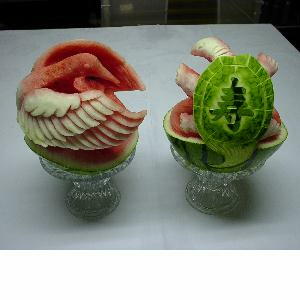
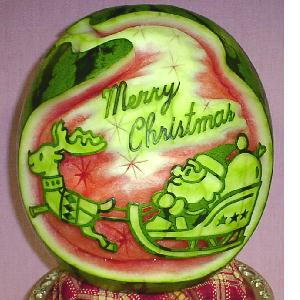
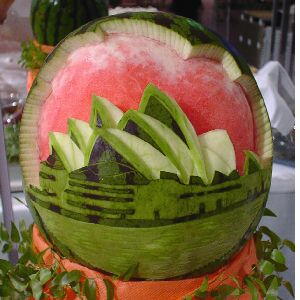
Carved in Fruit

Yesterday I had to go to the mall to get new lenses for my glasses. I had to wait an hour for the lenses, so I went to the food hall and had lunch. I sat and ate a bowl of noodles at a little bench and watched a stall worker cut a cucumber.

Her cucumber cutting skills were prodigious. She carefully peeled the cucumbers, then chopped them perfectly in half, long ways. Then she proceeded to chop the ends and diascard them and then she got to work on dicing perfect cubes.

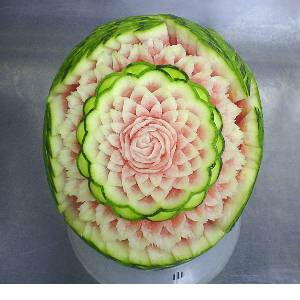
This got me to thinking about the guy I saw on the boat we took in Phuket to the Similan Islands who perfectly cut a watermelon on a speed boat in rough conditions. He had a technique of chopping that amounted to a perfect pile of appropriately portioned watermelon pieces with just enough rind for holding the melon piece. He also managed to do it without a chopping board while wielding a big knife.

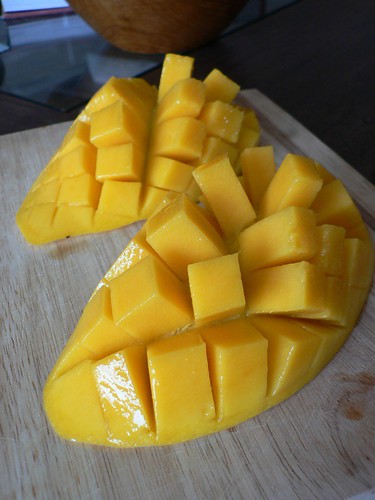
I also thought about a story my friend told me about when she lived in a village for 2 weeks in Cambodia. One day she was chopping a mango and making mango hedgehogs....as below...

Controversial Mango Hedgehog
Mango Hedgehog.JPG

The villagers all came and stood around her and watched and laughed at her, teasing her about the way she cut a mango. It seems that in that village there is only one way to cut a mango correctly and everyone knows it. You peel it first and then slice of the fruit flesh into shards. You do not make a hedgehog.

When Hock first arrived in Cambodia he had an extremely difficult time convincing all his new staff not to carve the fruit and vegetables into elaborate shapes such as flowers and birds. It took many months for Hock to drum out their propensity for making carrot birds and tomato flowers.


So I was sitting there watching the girl cut the cucumber and although I don't want to make any gross generalisations, I thought, "man, what's up with Asians and fruit and vegetable chopping?"


img086.jpg

img055.jpg

img094.jpg

img133.jpg

http://takashi64.hp.infoseek.co.jp/page009.html

Burning Ring of Fire

This week's food song, is the song I always sing in my head as I regret the previous evenings scorchingly hot Thai meal.

Most painful is the days after having eaten here.

Image0001 copy.JPG

It is my favourite Isaan restaurant in Bangkok. Isaan is the poorest region of Thailand, but it is also in my books, the yummiest. If you like larb, the Thai spicy salad made with ground chicken, beef, duck, or pork - then you like isaan food. Other famous Isaan dishes are: bbq chicken with spicy roasted rice chili, salt baked fish, and som tum (papaya salad), all served of course with sticky rice.


Image0001-1.JPG

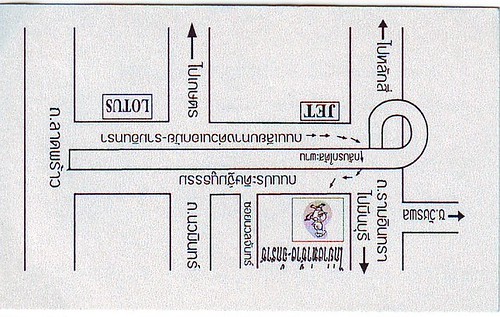
If you are ever in Bangkok, print off this card and show it to a taxi driver. By any luck you will be driven deep into the Thai suburbs. Before you journey too deeply along the congested suburban highways and into the territories of Thailand's burgeoning middle class suburban fantasies and gated communities, you should hit a main road that is dominated with enourmous towering restaurant/beer gardens. Most of the architecture will be a type of faux log cabin, with flashing neon crabs and fish rather than neon cowboys signs. At some point you will get to a roundabout and near to this roundabout is a small restaurant. It's not much to look at but the food is outrageously good. There is absolutely no english and no english speakers work there. But there are photos and so you can point and gesture to your mouth. I usually go with my Dad for fear of getting lost. Once my Thai improves (I start lessons this week) I'll be braving the traffic alone. It's a meal worth crossing town for (so long as you have nothing much to do the next day but stay close to a bathroom and hum quietly in your head "and I went down down down in a burning ring of fire")


Online Videos by Veoh.com

Blogger Templates by Blog Forum