Showing posts with label Food Writer. Show all posts

Food, Inc.


I went to watch Food, Inc. yesterday.

It was not only in line with what Eric Schlosser and Michael Pollan were saying - Eric Schlosser does not only show up in the film but also is a co-producer, and Michael Pollan speaks a lot in the film.

The story itself was not so new if you have been following the food issues in the past several years - what this film tried to do, it seems, is to make the message even clearer, make it approachable for the general public, or should I say, the consumers.

Sort of a similar fashion how Stonyfield grew into the third biggest yogurt producer in the U.S., and Wal-mart trying to move into organic business - efforts to bring the alternative into the mainstream are happening, and they are not without criticism for having come so far from the hippy small-scale idealism-laden operation.

There was something I did not like about the film - they sort of overused the image of the little boy Kevin who died of E-coli poisoning in the hamburger meat. I can see the filmmaker used it a lot to generate the sympathy from the concerned mothers - if that was the only effective way to communicate, it just tells me something about the self-centeredness of people - only when their children are at the risk, they want to make chanegs - in other words, they do not care unless they consider their children are at risk. The parents' protective nature may be only natural, but sometimes it seems that they only want to protect theirs and not many others.

In a strange way this movie made me cry, for thinking how far we have come to the point where they had to make this kind of movie, for thinking how this will appeal to the general public in the U.S., while at the same time it may be possibly viewed as a technological marvel in the eyes of the Third-World farmers, and for thinking why the U.S. consumers deserve to execute their purchasing power to change the world for the better - is this another kind of the America-saves-the-world story?

'wichcraft

"Slow-roasted meats, marinated vegetables, surprising flavor combinations, this is not your mother’s sandwich."

Top Chef judge and Craft chef Tom Colicchio has released a sandwich recipe book named after his own sandwich restaurant franchise. More than the book (which sounds, like Tom himself, solid & defiantly straightforward), the above sentence from the Random House website is quite fascinating to me.

Call me a punctuation pedant, but just because people on TV talk in soundbites, does that mean publishers should get all heady on the scent of commas and turn their noses up at a humble full stop...? Even an ellipsis or semi-colon would let us hop more comfortably into "this is not your mother's sandwich."

I mean this is not John Updike's sandwich we're talking about either.

I'm off to make a batch of watercress sandwiches (no crusts). I will eat them and make huffing noises about the state of the world today.

Another Food Ranter


More on The American Stomach

All I Want For Christmas: Four New Food Books

Whilst browsing the book exhibition at the recent anthropology conference on in Auckland I found four new food books I wouldn't mind having for light reading.

Bite Me

41PeGOHosfL._SL500_AA240_

Synopsis
Food is not only something we eat, it is something we use to define ourselves. Ingestion and incorporation are central to our connection with the world outside our bodies. Food's powerful social, economic, political and symbolic roles cannot be ignored - what we eat is a marker of power, cultural capital, class, ethnic and racial identity. "Bite Me" considers the ways in which popular culture reveals our relationship with food and our own bodies and how these have become an arena for political and ideological battles. Drawing on an extraordinary range of material - films, books, comics, songs, music videos, websites, slang, performances, advertising and mass-produced objects - "Bite Me" invites the reader to take a fresh look at today's products and practices to see how much food shapes our lives, perceptions and identities.


Food: The Key Concepts

31zfns43RsL._SL500_AA240_

Synopsis
This book offers an exciting, coherent and interdisciplinary introduction to the study of food studies for the beginning reader. Food choices, the author argues, are the result of a complex negotiation among three competing considerations: the consumers' identity; matters of convenience, including price; and an awareness of the consequences of what is consumed. The book concludes with an examination of two very different future scenarios for feeding the world's population; the technological fix, which looks to science to provide the solution to our future food needs, and the anthropological fix, which hopes to change our expectations and behaviors. As a whole this book provides an essential overview to this increasingly critical field of enquiry.


Food and Globalisation
9781845206796

Synopsis
Food has a special significance in the expanding field of global history. Food markets were the first to become globally integrated, linking distant cultures of the world, and in no other area have the interactions between global exchange and local cultural practices been as pronounced as in changing food cultures.

In this wide-ranging and fascinating book, the authors provide an historical overview of the relationship between food and globalization in the modern world. Together, the chapters of this book provide a fresh perspective on both global history and food studies. As such, this book will be of interest to a wide range of students and scholars of history, food studies, sociology, anthropology and globalization.


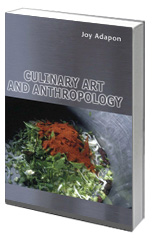
Culinary Art and Anthropology

9781847882127

Synopsis
Culinary Art and Anthropology is an anthropological study of food. It focuses on taste and flavour using an original interpretation of Alfred Gell's theory of the 'art nexus'. Grounded in ethnography, it explores the notion of cooking as an embodied skill and artistic practice. The integral role and concept of 'flavour' in everyday life is examined among cottage industry barbacoa makers in Milpa Alta, an outer district of Mexico City. Women's work and local festive occasions are examined against a background of material on professional chefs who reproduce 'traditional' Mexican cooking in restaurant settings.

Including recipes to allow readers to practise the art of Mexican cooking, Culinary Art and Anthropology offers a sensual, theoretically sophisticated model for understanding food anthropologically. It will appeal to social scientists, food lovers, and those interested in the growing fields of food studies and the anthropology of the senses.


Oh and an ice caddy with lid for whisky drinking purposes, a jewellery box, new handbag, and a nice arm chair please Santa

Bavarian Japanese

nomiya katze

I'm pretty much used to bitching about Japanese food in Europe. But today, for once, I am happy to have the shoe on the other foot, as I defend Munich's Nomiya from both a Süddeutsche newspaper reviewer (who titled her piece "A Lot of Fuss about a Little bit of Sushi") and grumpy bloggers, who whined about the lighting being too bright, which I do not agree with at all.

This outpost in the lefty, trendy area of Haidhausen and Au is a combo of old-fashioned Bavarian style, with scuffed wooden sideboards and solid plank tables, and a modern, cozy izakaya vibe. With the addition of some low-hanging lights around the sushi counter, and some cool artwork by a Japanese artist who's lived in Munich since the '80s, and actual Japanese chefs preparing the food, the overall experience is very pleasing indeed. Of course, don't come here if your idea of a Japanese restaurant needs to include giant sashimi platters. This is an izakaya, and it's very casual food served here. So sashimi-lovers will need to get over it.

By the way, it's not uncommon to be seated quite close to other customers in an izakaya, so this is also something that fussy reviewers will need to get over. On the night we went, we weren't squashed next to blustering beer-lovers: just quiet, intellectual-looking local residents.

nomiya

Good things:
A selection of grilled kushi-skewers including crunchy pear cut into an almond shape and wrapped with bacon. The sushi was yummy: all the ingredients were very fresh. I rate this type of casually presented 'home-style sushi' far above the overpriced, sub-standard stuff served at many places in Germany.

IMG_0172

The 'keller bier' (basement beer) on tap was Bürgerbräu Hell - it was the highlight, upon which I do agree with Süddeutsche - served in a beer stein mug.
The cha-shu salad, with a nicely arranged small portion of pork, curly lettuce, some spring onions, sesame dressing and a dollop of mayo, also rocked.

cha-shu salad

Finally, the horensoo-gomae, which can be a benchmark of quality in Japanese restaurants, kicked ass.

horensoo gomaee

Warm sesame balls or German red groats for dessert. (sour-sweet confiture of red berries)

keller bier


Nomiya
Wörthstrasse 7
81667 Munich,
Germany
+49 89 448 4095
+49 89 4895 2458
http://www.nomiya.de

I just missed.....

The Oxford Symposium on Food and Cookery 2008, this year's topic...vegetables

I'm writing a chapter on vegetables at the moment

Oh well, maybe I'll try and submit a paper for next year's do....on "food and language"

There are two other upcoming events also

Calls for papers:

Tasting histories: Food and Drink Cultures through the Ages - a research symposium, graduate workshop and public conference February 27-March 1, 2009 Robert Mondavi Institute, University of California, Davis, California
We are interested in receiving papers that explore critical issues in food and drink production and consumption that relate to the body and that deploy a world historical lens.

CFP: Food, Culture, and the Law - a call for papers
The field of food studies has grown enormously over the last decade, as evidenced in part by the steadily increasing number of academics and professionals in the humanities, social and nutrition sciences, culinary arts, and hospitality studies who have become engaged in cross-disciplinary conversations about food. Operating in tandem with the explosion of popular fascination with food, these conversations have been joined of late by academics, attorneys, and activists who are particularly concerned with the question of how our relationship to food is, has been, and should be, mediated through law. In response to this emerging area of inquiry, we are soliciting both conference papers and publishable essays that integrate multidisciplinary scholarship in food studies with legal scholarship related to food in existing fields such as agricultural, constitutional, criminal, administrative, tort, intellectual property, and international trade law.

Quote of the Day

"(Journalists), too, are made anxious and fearful by hard economic times and the prospect of wrenching change. YouTube, the medium that has transformed our culture and politics, didn’t exist four years ago. Four years from now, it’s entirely possible that some, even many, newspapers and magazines (...) won’t exist in their current form, if they exist at all. The Big Three network evening newscasts, and network news divisions as we now know them, may also be extinct by then

(...) Now that media are being transformed at a speed comparable to the ever-doubling power of microchips, cable’s ascendancy could also be as short-lived as, say, the reign of AOL.

The Web, in its infinite iterations, is eroding all 20th-century media."

- FRANK RICH
NY Times, August 30, 2008


Frank's not the first to proclaim the end of the mainstream media. The ephemeral and cannibalistic nature of the internet is nothing new, either.

But it's interesting to consider modes of discourse while they are still evolving. Since there is such an oversupply of columns and commentary out there, most of it regurgitating scraps of other media coverage, it seems worthwhile to try to define what classic writing techniques still work or don't work.

Lately, I've been suffering from blog fatigue. Despite the fact that I still spend at least an hour reading or watching various media each day, sometimes the constant ricocheting of ill thought-out arguments feels like you're trapped in someone else's head when they're on acid. I had to agree with my workmate Niklas when he said the other day "All in all, it's this whole criticism of criticism of criticism thing in blog culture that drives me over the edge. "Everyone's a critic and most people are djs" as The Hold Steady sang a couple of years ago."

In the paradigm of food writing I guess this means that everyone's a pundit and most people are socially-aware adventurous home chefs. And it does start to get exhausting how everyone has to have a controversial opinion about everything. Pop will eat itself, and so will the need for bloggers to second-guess themselves on every teaspoonful of feel-good ethical food choices.

Although 'traditional' journalism still has a lot of power to convey a story with complex emotional narrative, it seems that when it comes to news, more and more it's only meta-journalism like the Daily Show that feels like it can be trusted, even though it, too, has an agenda.
Is it that the truth these days is too absurd to be anything more than comedy? Or is it that the classic journalistic forms (mostly TV) have become so formulaic and tailored to audiences, that only a new 'blog-like' formula/critical dissection of pre-existing narrative can be swallowed without gag reflex?
What does this mean for other types of writing and journalistic reportage?
Are our emotions dulled?
Are we thick, or too thin-skinned? Are we hooked on controversy, and sight-gags?

You may recall the recent thelastappetite.com mini-debate on whether readers are really interested in non-myopic food writing, beyond a 2-paragraph soundbite.

I would like to ask Gut Feelings members - what is it about the writers you enjoy, that makes their shit work? And how often (let's say, per week), do you read an article (especially a food article) that's longer than 600 words?

Pre- Fab Sprout


I thought this photo was pretty cute.

It's Village Voice writer Nina Lalli's dad, who has contributed this nice looking thanksgiving recipe
for brussel sprout petals with pine nuts and walnut oil.

Nina says "He really, really wanted to be on the internet."

At One With Oneself.

Photo Sharing and Video Hosting at Photobucket

In general, I am against the cult of personality, unless the person is dead, in which case a bit of mythology is sort of permissable. I might admire certain chefs and food writers, but I tend to eye celebrity chefs and their expensive restaurants with suspicion. It's all about how much muscle your mastercard can flex and how much the bankers want to throw away on the expense account and going to THAT restaurant becomes a lifestyle accoutrement just as much as the Italian catskin boatshoes are.

To put it more simply, I'm a bit stingy. Also, unless I am getting takeout jerk oxtail or baking a meat pie at home, I prefer clean, light, simple flavours and a multiplicity of dishes. I prefer food that is soaked in dashi and enhanced with handfuls of fresh chilli or herbs to something that is braised for three hours in butter to taste good. So I am very wary of expensive food, which in general seems to be very rich, and the monotonous focus on animal proteins and stodgy celeriac purees in a typical secondi is just too overblown: much like the rich people who typically love that kind of thing. OK, the dishes might be good, just not THAT good that I would spend the cost of four other equally delicious meals on it. In my boringly picky opinion, the only place where cost seems to have equalled value when it comes to fine dining is in Japan, and maybe at Hakkasan in London, but more on that another time.

In fact, (although having me review a fancy restaurant is like sending someone who's allergic to seafood to review a seafood restaurant), the only area where cost seems to more consistently reflect deliciousness is in the arena of cocktails, and Mark McEwan's 'One' restaurant in Toronto's upscale Yorkville area confirmed this, along with my other deep-seated prejudices.

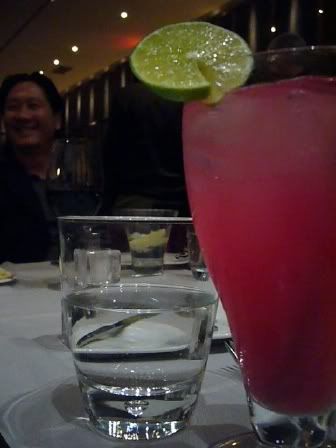
The bar area was dimly lit and steeped in sepia brown chic hotel ambience. The cocktails which we had were excellent – a caipirinha made from crushed black cherries and raw sugar and cachaca; a mojito made with Grey Goose and cloudy apple juice; and an embarressingly pink concoction of grapefruit juice, an old-fashioned brand of Canadian creaming soda, key lime and an alcohol that I can't remember, served with a 'sour key' (classic Canadian candy).

Photo Sharing and Video Hosting at Photobucket

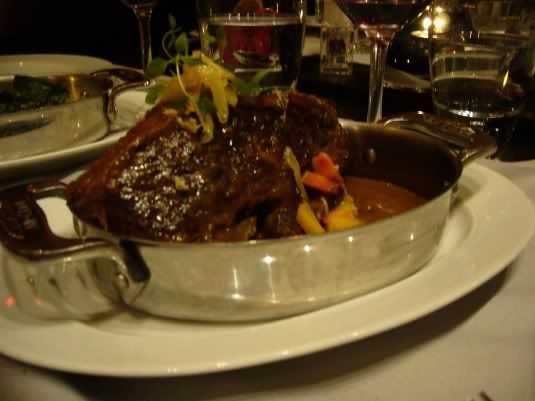
When it came to the service and the food, our post-meal discussions on the drive home with Jim & Many, who are much more qualified to judge such an establishment, were echoed in this review by Amy Pataki. The service was awkward and at odds with the chic surroundings; so too, was the concept of shared plates when served on silverware. The forced casual-ness of the food and service clashed with Yabu Pushelberg's modernist design of the restaurant interior (the others in our party found the design too nouveaux riche though I actually liked it). The Kobe beef was cold by the time it reached our table; the braised beef shoulder was quite delicious but although slightly larger than a typical main, it hardly seemed designed for a fun shared eating experience. One would prefer large messy platters, gigantic salads, deep bowls and plenty of dipping things and ideally food that could be grilled or stewed at table.

Photo Sharing and Video Hosting at Photobucket

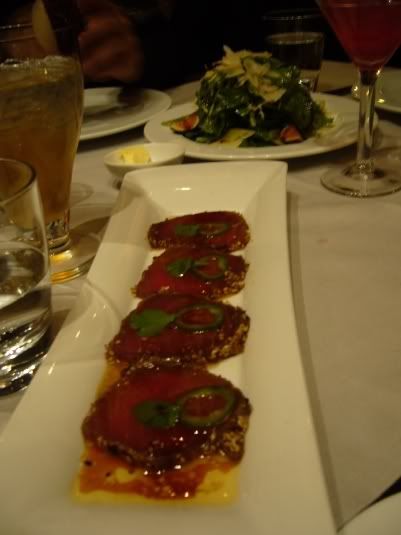
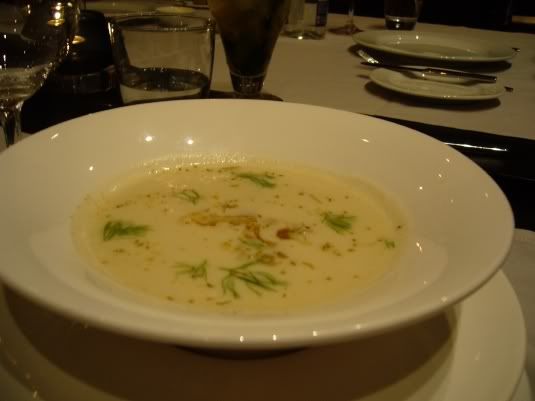
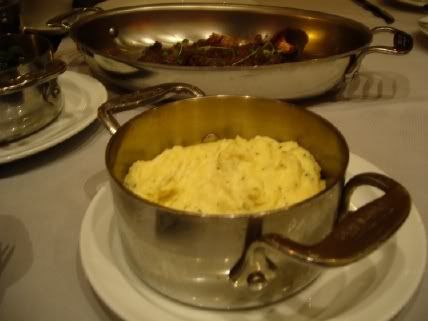
The polenta with mascarpone & thyme and the spaghetti squash with ginger and the tuna sashimi with lemon & lime peel were very good, but again, didn't seem especially to match the whole shared eating concept. It was like a normal fancy restaurant experience, except that everybody was awkwardly picking off each other's plates. The fennel soup with roasted black cod as a starter was really yummy, even though I don't usually like these cream-based soups that are also very popular in Germany.

Photo Sharing and Video Hosting at Photobucket

Polenta as communal fine dining:

Photo Sharing and Video Hosting at Photobucket

Anyway, after we left Toronto, I finally got around to reading Jeffrey Steingarten's column in American Vogue, which had been sitting beside my bed all those weeks, and who did he praise extensively in it but Susur Lee, another of Toronto's hyped restaurateurs, who's been on Iron Chef and who I had been sure would serve up the kind of over-rich, overhyped boring pan-Asian food typical of places like Long Grain in Melbourne. (BTW Mark McEwan of One has a TV show too). But after reading Steingarten's review I was really kicking myself for not going to one of Susur's restaurants for a modest lunch. Oh well, that's what you get for being prejudiced against celebrity chefs. Bigots always get what they deserve.

Address: 116 Yorkville Ave.,
416-961-9600
Apparently dinner for two costs $250, owch!! Don't do it!
Excerpts from this week's Lynn Yaeger column in the Village Voice:

"I walk past the windows of Toys "R" Us and am treated to the nauseating sight of the Disney Enchanted Talking Kitchen. It seems that this item, which is being ministered to on the box by a pair of miniature fairy princesses, offers an oven that lights up and chats. (But what does it say? "Read Susan Faludi"?)"

Photo Sharing and Video Hosting at Photobucket

"Since I'm no fun at all, I have been worrying about sexual stereotyping in costumes—so many sluts versus superheroes, vixens versus vampires. Is it just me, or are buxom lassies and virile jerks pretty much the order of the day? Are they being worn, at least in some cases, without the sufficient dollop of irony?

There's a Harajuku girl ensemble that looks disconcertingly like what I have on —but my nerves are calmed by the outfits greeting me at every turn: life-size [Marshmellow]Peeps, Wheaties boxes, infant-size M&Ms (at least food is gender-blind)."

Taco costume:

Photo Sharing and Video Hosting at Photobucket

Wholesome banana jazz-dancer:

Photo Sharing and Video Hosting at Photobucket

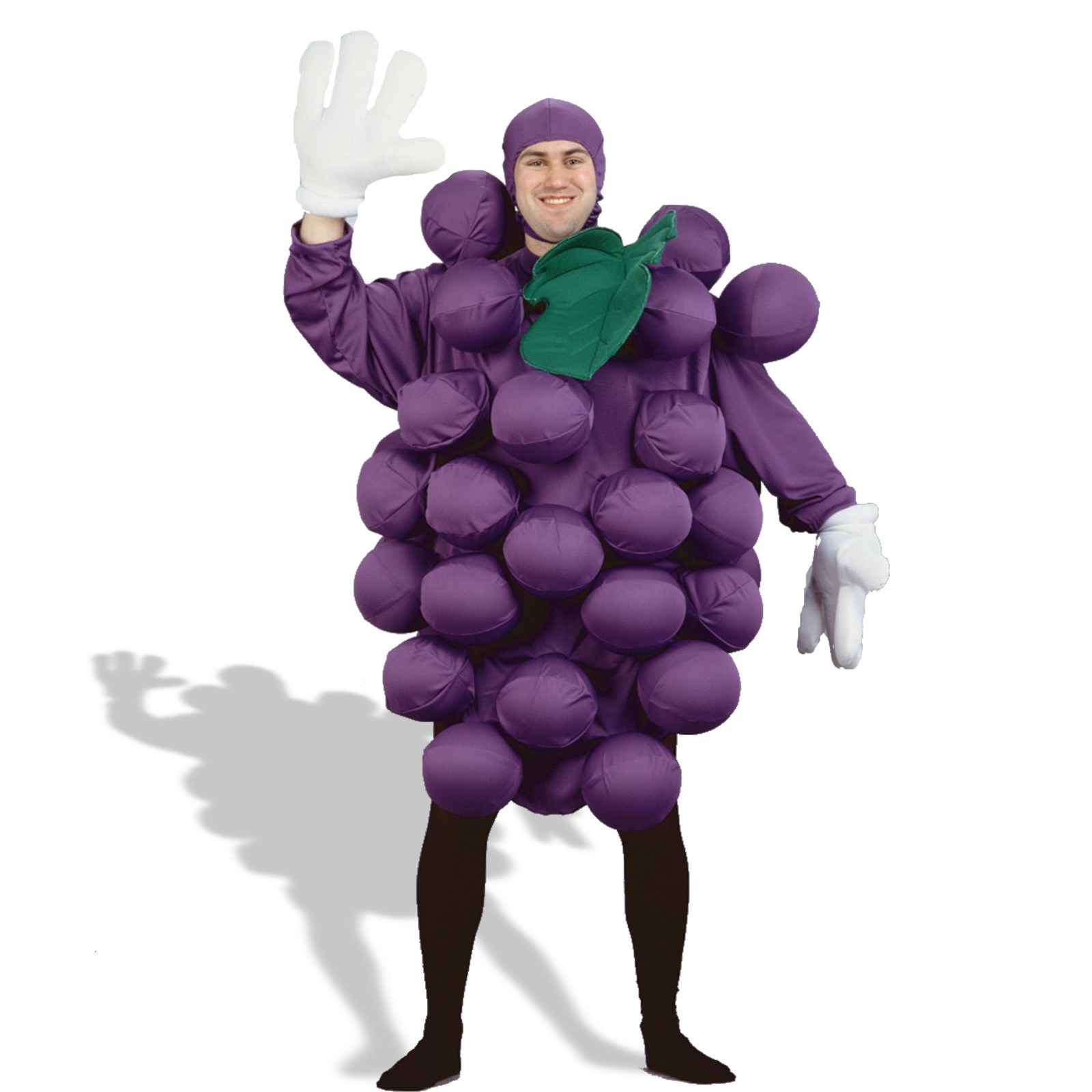
You can never be a sour grapes wearing this fun costume!:

Photo Sharing and Video Hosting at Photobucket

Is it a boy or a girl? Neither, it's a marshmellow:

Photo Sharing and Video Hosting at Photobucket

Pumpkin dog:

Photo Sharing and Video Hosting at Photobucket

Oh, Canada

My sister's husband is Canadian, and on their recent trip to Canada she wrote me about the foods which they particularly enjoyed feasting on.

"Breakfast pitas (a wholegrains, fruit and cinnamon pita bread, best toasted with honey or jam), poutine (Quebec speciality- hot chips, melted cheese curds and gravy), perogies (a Ukranian dumpling filled with cheese and mash, and fried with onions and bacon, and served with sour cream), beaver tails (kind of a hot pastry oval covered in sugar and lemon), Doritos (the perfect junk food spicey corn chip), Montreal bagels (chewy like no other), pickled eggplant (spicy and salty and sort of chewy crunchy, usually eaten in a bagel sandwich), wild blueberries (tiny and tasty, and best eaten seconds after picking from an island in the lake, only reachable by canoe)."

We're coming up to our 5th week in Toronto, and we only ate a couple of things on that list. The breakfast pitas are indeed dope, while the poutine was pretty good but undoubtedly better in Quebec.

Still, Toronto is a city of many cultures and thus the list of foods one could or should try is very long.

The airport in Toronto is rather grey and shabby, and one's first impression upon being downtown is of a city that continually knocks down and rebuilds, so that the Financial district and the more conservative (east) end of Queen West is peppered with Gap, Zara, HMV and countless shiny new fusion restaurants with names like 'Spring Roll'. Very 'New World'. But interesting in that it has all the towering buildings and wide avenues of a huge city, but lacks the underlying anxiety of big cities in the States.

As Torsten Schmidt put it: "it's certainly a mash-up of post-colonial, imperial, British-empire city, you get a lot of that, and then definitely it's a city on the North American continent. And a lot of those elements are juxtaposed and funnily... can you say "inter-diced?" And this whole thing about the grid system, you think you've got it all worked out, and then sneakily those grids sometimes change lanes, and you're like, hang on we were just here...but now we're over there.

But what I can't put my finger on is... obviously the quality of life is pretty high here. And it seems like the whole multicultural thing is true - every city with over 500 inhabitants claims to be multicultural because they've got a kebab stand and a Chinese take-away - but you do really see a nice, diverse mix of people here. And they all seem to get along, at least on the surface level. There's no underlying tension like, say, in London. But that can be a good thing as well. Toronto seems very middle-class, very safe, and it's like you're at school. You know the really pretty girl with the really nice haircut and the nice clothes - is this really the girl you'd like to ask to dance? I hope that in the next few weeks we're gonna find the moles and the freckles and a bit of cross-eyedness."

The story of Toronto is largely one of immigrants, and it's when you venture into the culturally-infused neighbourhoods that you find the quirks you were looking for, as well as the quaint little stores that are more than fifty years old. With the largest number of foreign-language speaking residents of any city besides Miami (don't ask me how they figured that out), the West Indian and Portuguese communities have had a particularly big influence on the cultural development of the city, and there are quite a few streets devoted to Chinatown, Little India, Greektown, Little Italy, Koreatown, and Cabbagetown (home of original Irish settlers) too.

So what dishes are specially typical of Toronto then? As part of the event we're working at in Toronto, some local writers made "A Jaywalker's Guide to Toronto". In the "Snack Attack" section, Graham Duncan wrote "If Toronto had a signature dish, it must be the Italian sandwich."

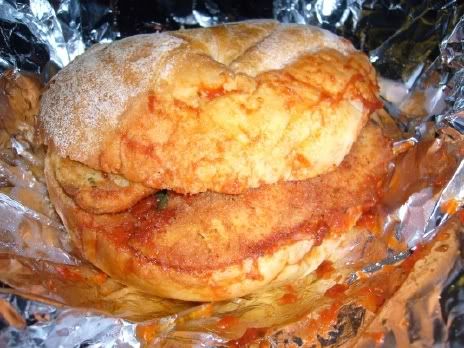
I haven't been able to find any explanation online of why exactly this must be so (Graham says it's basically because the Italian community here was the largest influx of sandwich-creating immigrants), nor could I find any tales of why the Italian Canadian sandwich involves breaded, deep-fried cutlets of veal, beef or chicken, hot & spicy tomato sauce and a chilli or roasted green capsicum or two on a soft kaiser roll. (Somewhat different to the typical Italian American sandwich, which looks more like your regular Subway fare on a split baguette).

We got ours (a chicken one) from San Francesco on Clinton St in Little Italy, which also sells Italian pear nectar at a very reasonable price. It was good, but very junk foody. Fat pieces of fried chicken. Tasty sauce, almost but not quite unbearably spicy. Certainly not the most delicious thing we've eaten in Toronto, but I can imagine that if you grew up eating them they'd be a nice comfort food...
The best thing was the location, a quiet corner of Little Italy, with crickets singing in the trees and the glow of Bitondo's pizzeria across the street and Italian people pulling up in cars for their takeaways. (Bitondo's, despite the authentic mobster-looking staff, is not so good: the sausage tastes faintly of fennel but the pizza is thick and ungainly).

Photo Sharing and Video Hosting at Photobucket

Photo Sharing and Video Hosting at Photobucket

Photo Sharing and Video Hosting at Photobucket

Red Hook, bridge, chorus

Photo Sharing and Video Hosting at Photobucket

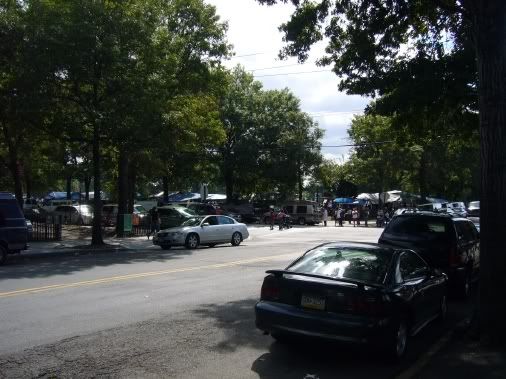
Walk straight down Clinton St from Cobble Hill, Brooklyn, past Italian gardens with religious statues and under the Queens-Brooklyn expressway, and you're in Red Hook, a whole different ball game.

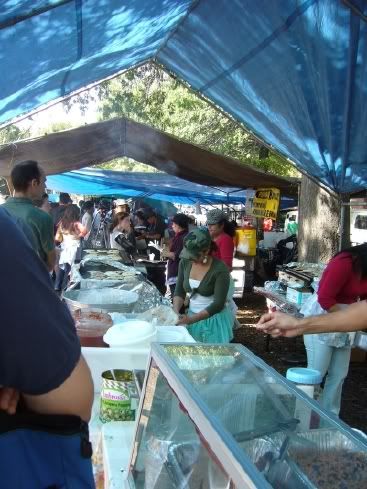
Soccer, busted up buildings, trees, grass, and amazing Latin American food throughout summer.

Approaching the food vendors:

Photo Sharing and Video Hosting at Photobucket

Quite surprising that so many people I've met who live in Brooklyn have not been to the Red Hook Ballfields...and the ones who have, act real surprised that we went there. Surely, something this good can't be a secret, when it's been there for ten years and it gets press like this article in the NY Times, which came with a tantalising accompanying video, effusing that "there is no better street food scene in all of New York", and "it’s the kind of experience that reminds you why you live in New York."

Also, Nina Lalli wrote in this 2005 article in the Village Voice about how Chowhound.com bloggers were "plotzing" over the Central American/Mexican/South American food. She explained, "(For non-Yiddish speakers, to plotz means to explode, crack, or burst). "Louise", who had written up the original report (which fellow 'hound Bob Martinez called "the definitive post on the ball fields"), replied with a confirmation: "Totally plotz-worthy.""

It was the nicest way to spend a hot few hours, chilling on the grass, eating snacks, while cute kids run around. The crowd was mostly Latino/Latina, with a few Brooklyn-dwelling palanga/pakeha families with the occasional adopted Chinese baby.
Just a few meters up the road is this big pool which was already drained since we came in early autumn, but apparently is lively throughout summer and kids have to wear white tee shirts to avoid gang skirmishes over colour affiliations.

If you go there, the article by Peter Meehan in the NY Times gives a very good directive of what to sample, going from right to left along the stalls.

Photo Sharing and Video Hosting at Photobucket

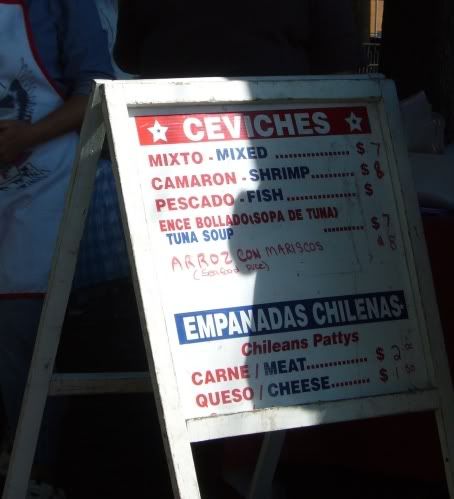
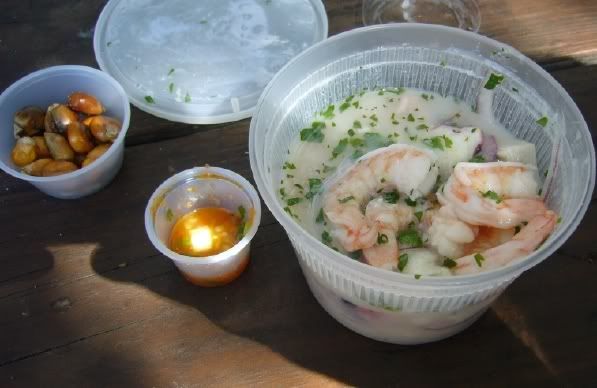
The Ecuadorian-Chilean ceviche-mixto was the best I've ever had, heavy on lime juice, spring onions, cilantro, & red onions. I would ask for two servings of hot sauce. Love those roasted corn kernels.

Some of the young guys who'd been playing soccer ordered something similar but hot, that looked really good too: I guess it was the Ence Bollado.

Photo Sharing and Video Hosting at Photobucket

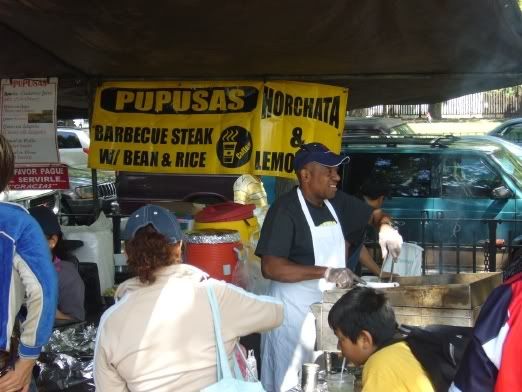
The Baleadas from Ms Carcamo at the next stall (and the cinnamon 'Horchata' rice milk with unrefined sugar) were delicious. That was actually my favourite thing – so good I forgot to take a picture unfortunately. Just-made wheat tortillas folded around a smear of beans and a sprinkling of grated cheese, very simple, soft and tasty, and not greasy. Peter Meehan writes, "Ms. Carcamo left Honduras for Brooklyn more than 20 years ago and has been turning out these baleadas, which might be most expediently described as Honduran tacos, at the Red Hook ball fields for more than a decade. Away from the sun and soccer, on weekdays and through the winter, she runs Honduras Maya, her restaurant on Fifth Avenue in Park Slope." Watch the NY Times video to see more. It was a shame that there was a ridiculous queue for the pupusa stand next door (and a camera crew filming them too), whereas the Baleadas were sadly neglected, with hardly any customers. Hang in there, Carcamo crew.

Making baleadas:

Photo Sharing and Video Hosting at Photobucket

Pupusa:

Photo Sharing and Video Hosting at Photobucket

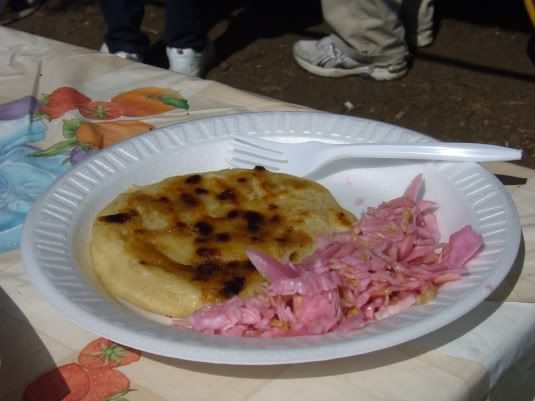
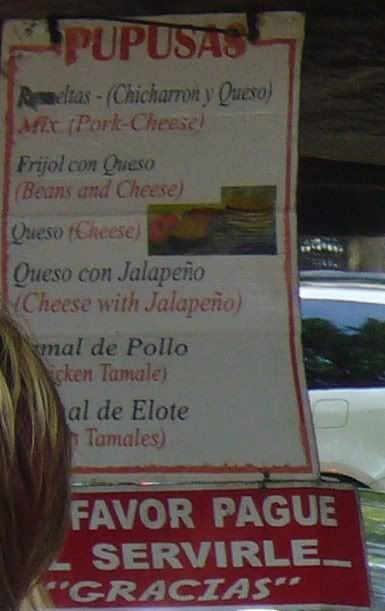
The Salvadoran-style pupusa (we had pork and cheese but if I went again I'd get jalapeno and cheese) was yummy & fresh but definitely greasy and junky.
Here is Nina Lalli's description: "Masa (meaning 'dough') is made from corn kernels dried by fire or in the sun, which are boiled and ground to a thick paste. It can also be dried to make flour, which just needs a little water to form tamales, tortillas, etc. Foodies generally become hysterical when they see the real thing, and with good reason. A freshly made tortilla is more than just a vehicle for its filling—it is crisp on the outside, but thick, soft inside, hot, and tasting truly of corn. I devoured a pork and cheese-filled pupusa, which is flattened into a fat pancake and cooked on a griddle until the cheese is melted and oozes out when cut with the side of a fork. For perfect contrast, it is served with a heap of pickled cabbage."

Photo Sharing and Video Hosting at Photobucket

Photo Sharing and Video Hosting at Photobucket

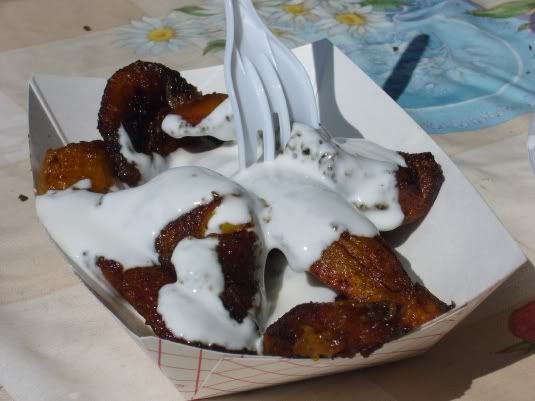
Actually the fried plantain with crema (like runny sour cream) from the pupusa stall was even more memorable. Plantains, where have you been all my life?

Photo Sharing and Video Hosting at Photobucket

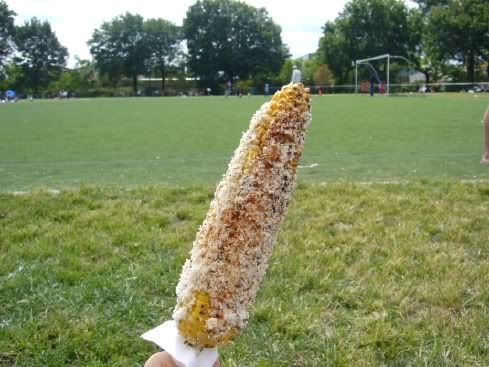
The charcoal-cooked corn (elotes) was tasty, dredged in mayo, chilli, lime and crumbled Cotija cheese (we make these at home sometimes, using parmesan, since hearing about the version at Cafe Habana in Nolita a couple years ago). I would recommend to hold the mayo though: it overwhelms the other flavours a little too much and is too rich for my taste.

Photo Sharing and Video Hosting at Photobucket

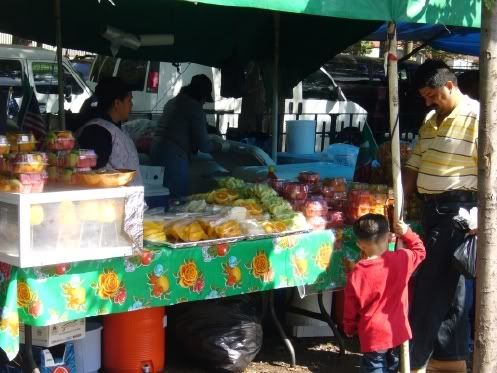
For dessert we had the rest of the Horchata and a bag of chopped mango to which we were given the option of adding chilli or salt. There were piles of fruits and mango hedgehogs on sticks. The whole area was hot from the sun and smoky from all the cooking.

Photo Sharing and Video Hosting at Photobucket

Cooling off:

Photo Sharing and Video Hosting at Photobucket

Chilling:

Photo Sharing and Video Hosting at Photobucket

Beware of Chowhounds:

Photo Sharing and Video Hosting at Photobucket

The Red Hook food vendors are there Saturdays and Sundays from May through October. The atmosphere and food are SO good, if I lived locally I'd go every weekend for sure. Next time I want to try the Mexican Huaraches and the chicken tamales.
MySpace Codes


Regrets, I've had a few
But then again, too few to mention
I did what I had to do, and saw it through without exemption
I planned each charted course, each careful step along the byway
But more, much more than this, I did it my way

OK, when it comes to our dining choices in NY I pretty much did it Sietsema's way. And in one particular case, it may not have been the BEST way. There was a tinge of regret when I made the mistake of checking up on Oversea Asian on Chowhound.com. On that website, the legions seem to prefer another Manhattan Malaysian joint. Which lead me to wonder for a moment, if I should've done it Skyway.

But then I thought back on the delicious sweet-sour mango chicken, the flaky, buttery roti canai (so it probably is pre-frozen, so what?), and the melange of nasi lemak flavours and I was at peace.
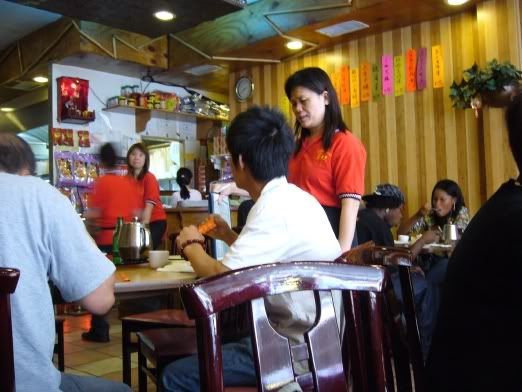
Photo Sharing and Video Hosting at Photobucket

It IS still a lingering regret that we didn't have time to explore Sietsema's recommendations of Malaysian and other 'asian cuisines in the outer boroughs. I have a certain stubborn idea (similiar to Maytel and Hock's) that restaurants should be humble and obscure, that the 'real' and best Asian food would be found only in Queens or even New Jersey and never in Manhattan. (I have Sietsema to thank for this prejudice, too). So I have shovelled all regrets aside, since i figure Skyway is just another Manhattan joint, after all...

Must admit, I do find it bewildering and somehow irritating to broach the seething mass of conflicting ideas on Chowhound about which restaurant is 'best'... most of them write in a way that is so earnest and humourless and often seems so ill-informed.

Still, one is inclined to think that some of them must have a good idea about what's good to eat.

The brave legions of Chowhound posters have quite a task on their hands. In NYC (as in Tokyo) there are SO many places that are good to eat. Some of them are only good for one or two dishes, and some of them decline in quality within months while new ones pop up every day.

To try to define what is 'best' is a virtual impossibility, because when there are so many options, 'best' depends on what you feel like that day, doesn't it?

I found this blog whereby a person spent a year eating their way around the world, and then summed up their top fives in various categories. Some of the places and dishes sound worth trying out, but the lack of scientific approach and the profusion of locations and cuisines makes it all seem rather random. Since it could take decades of living in a certain country to become an expert on a cuisine, it is bewildering to see someone try to come off like an expert on Napolitano pizza just from having passed through there for a week or two. This, dear friends, is the nature of our day & age. Foodism, dear friends, is at work everywhere you look.

Anyways. No matter how you get your info, the main point is to find delicious meals.

There are two options in a big city like NYC. You could spend two weeks blocking out all the eateries from a certain cuisine and eating your way through all of them. Or you could make a virtual career out of trialing places that you've seen recommended on the web. For instance, I found this site by an enthusiastic eater who made a shortlist of places she wanted to try out in NYC culled from Sietsema's recommendations - and then cross-referenced with Chowhound and a cabbie food-blogger. I must say that we enjoyed every single meal recommended by Sietsema. But I suspect - foodism irritations aside - that if I lived in NYC I would resort to a similar strategy.

OK, so enough rambling. I am NOT an expert on Malaysian food. For some reason there is a lot of really good Malaysian food in Wellington, NZ, where I grew up. As take out it's more of a tradition among people I knew than Thai or even Chinese, so it reminds me of being 16 and eating searing egg sambal.

One of the things that impressed me about Oversea Asian was the freshness and tastiness of the vegetables that were involved. Mango chicken:
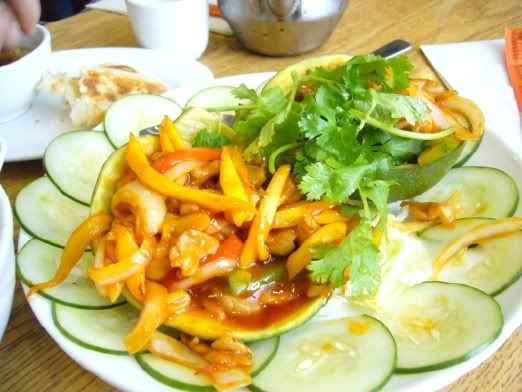
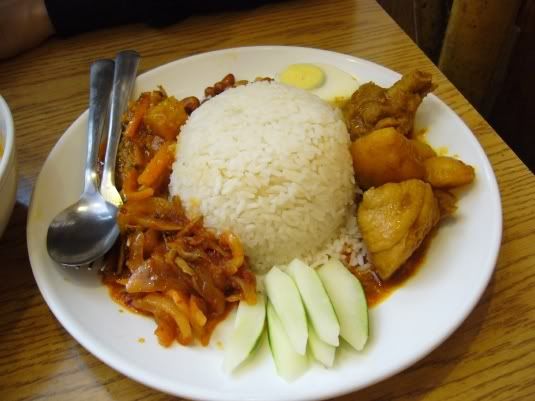
Photo Sharing and Video Hosting at Photobucket

Photo Sharing and Video Hosting at Photobucket

I wished the Nasi Lemak had been a bit less dry & a bit more coconutty (like the superb coconut rice we had at Village Mingala the night before - but that was a Burmese restaurant so I shouldn't confuse the matter! The achat (sweet/spicy/sour pickled veges) that came with it were great and the general confluence of tastes and textures was very satisying.
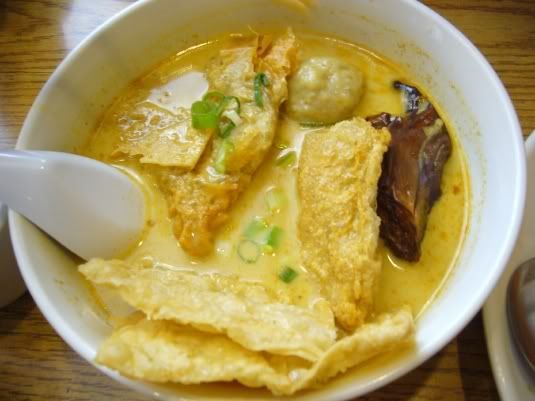
Photo Sharing and Video Hosting at Photobucket

Above you can see Yeong Tofu, the dish that enticed us to Oversea Asian in the first place. Here is the description by Sietsema:
"It might be the name of a prime-time soap, set in an organic supermarket and featuring a cast of glib twentysomethings: Young Tofu. Instead, it designates a clay pot that sits steaming in front of you, a collection of stuffed objects in a curried coconut broth ($5.25). Bulging with shrimp-laced tofu paste, the okra, eggplant, and long green chiles sink to the bottom, while Venetian barges of fried and unfried tofu float lazily by. This liquid museum of curd would have made a complete meal in itself, had the bewildering, 150-item menu not tempted you to stick your neck out further."
(Read the full review here: it's from '04, mind)

The crispy fried tofu skin with the creamy broth was superb. (We chose half chicken broth and half laksa-style curry mixed). 'Yeong' in cantonese means to stuff. So Yeong Tofu means veges stuffed with tofu, and the dish also included pieces of eggplant welded with fishpaste that tasted a little musty like the back of the shelf in an old chinese supermarket: but in a good way.
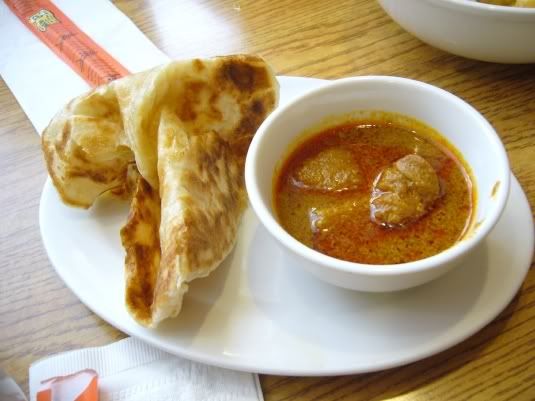
Photo Sharing and Video Hosting at Photobucket

The roti canai was very good, the accompanying curry with hunks of meat very tasty.

Overall, it was a delicious and over-the-top lunch (so much food!) washed down with plenty of tea and nice before strolling to Alife so Erik could buy a purple sweater.

It may not have been THE best Malaysian NYC has to offer, but it was very good, and it made me wish there were more Overseas Asians in Germany. I would be very happy if this restaurant existed in Cologne.

As a point of consolation for those of us who don't have the option of being in close proximity to the Italian food of the Bronx, the Asian spots in Queens and the Latin American food of Jackson Heights simultaneously, I just read the following inspiring comment by one Malaysian blogger:
"I used to drive 5 hours to find good Chinese or Singaporean or Malaysian food. Now I prefer to spend 5 hours preparing it myself."

If you, too, feel a dearth of Malaysian food in your life, this is a recipe for Yeong Tofu. Give it a shot!

A customer contemplates the qualities of a good nasi lemak:
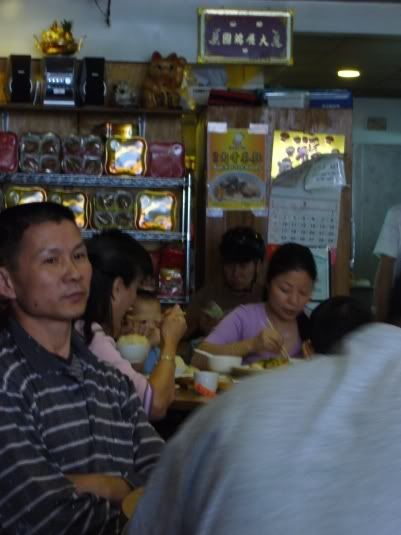
Photo Sharing and Video Hosting at Photobucket

We did really well on this trip to NYC, all thanks to Village Voice restaurant critic Robert Sietsema. Nary a bad mouthful passed through our gullets. The only sadness was that we couldn't manage to eat two big main meals per day.

A definite highlight was Hill Country Barbecue, located a block west of Madison Square Park, in a block that at night time is dark, stark and does not feel that it will offer up any delights. However, it does.

Read Sietsema's admirable review of Hill Country

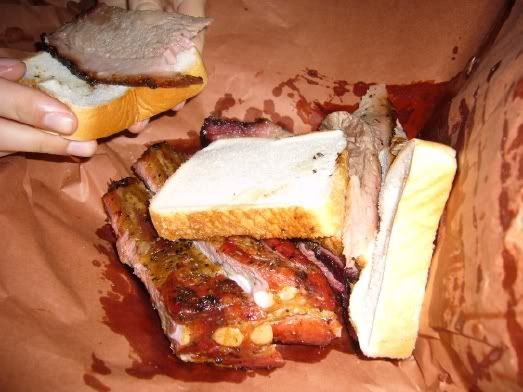
If you can stand the fact that Hill Country is a loud, brash, almost Disneyland-ish BBQ experience, you will love it. We actually saw a father & son arrive for dinner in ten gallon hats. Hill Country is styled after the beloved Texas Kreuz Market, right down to the bathrooms downstairs which are fitted out to resemble wooden outhouses (within a separate Ladies room of course). There was NFL playing on TV screens, loud music on the sound system, and a gimmicky system whereby you take your order card to the 'stalls' of the barbecue 'market' and when someone shouts to you that you are next in the queue of (mostly white) customers, you shout to the (mostly African American) 'pitmasters' that you would like a quarter pound each of lean brisket and moist brisket with white bread (scrupulously following Sietsema's directive), and they pull out smoky meat from black iron-lidded brick holding bins (the hulking metal Ole Hickory pits, each of which has a smoking capacity of 1000lbs of meat, are visible beyond some glass doors), and plopped onto a twist of butcher paper on a plastic tray. Then you get your sides from the next stall, then you pay at the cashier. If you want to get a table in the pleasant noisy warmth upstairs or at the long communal tables downstairs, where the bands play and where there are happy hours for Jack Daniels, you're best to book. There seem to be some nice music booked there, like The Poor Man's Roses, a Brooklyn-based Patsy Cline tribute band. We were able to get a table on the street right away without a reservation, which was fine for us, though the mix of NYC hubbub and Texas smells inside would be worth booking for. The black-people-serving-white-people thing made me a bit uncomfortable but everybody seemed pretty happy with their jobs and the atmosphere was nothing less than congenial.
The ordering system was quite hectic and we were glad to know ahead what we should choose.

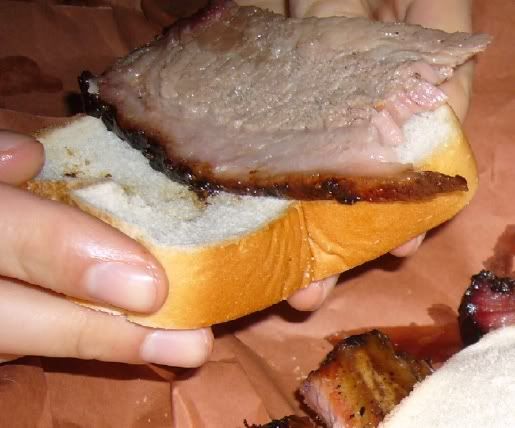
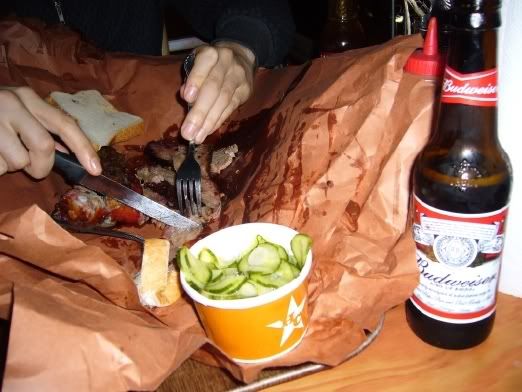
We loved the moist-and-lean brisket eaten together on white bread, so soft, greasy, smoky, floppy-tender and delicous. Unlike any beef experience we'd ever had. The pork ribs were better with a little of the sauce in the bottle at the table.

Photo Sharing and Video Hosting at Photobucket

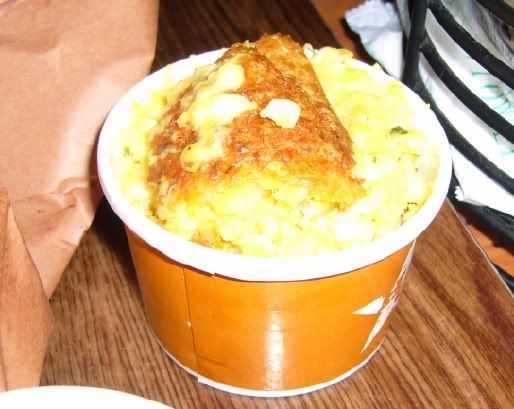
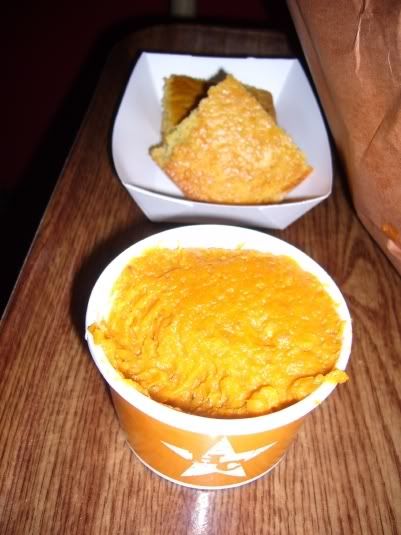
The corn pudding was indeed wonderful. A savoury sort of souffle with a deep corn flavour and touch of sweetness from the corn with slightly crunchy crust, we agreed with Sietsema that it was the best of the sides – Erik also liked the skillet corn bread though I found it too sweet and tasted somewhat of baking soda. I did also like the sweet potato mash with bourbon.

Photo Sharing and Video Hosting at Photobucket

Looks like baby poo, tastes delicious. I am a maniac about almost anything involving sweet potatoes, though, and most things with a sloppy pureed or mashed consistency. The Cool As A Cucumber salad (ordered as a gesture towards green food) was ok. Beware of ordering too much... it might not seem like much, but a half-pound of meat plus one side is more than enough per person... I wished I'd had room for the peach & blackberry cobbler.

What heaven looks like:

Photo Sharing and Video Hosting at Photobucket

Photo Sharing and Video Hosting at Photobucket

Hill Country
30 West 26th Street
(212) 255-4544

More photos of Hill Country, including the Ole Hickory pits.

Blogger Templates by Blog Forum