Showing posts with label food science. Show all posts

After work drinks

Most chefs need a drink after work.

If you are wondering why. Ritchie explains.

While a good 800 people line up to get into our work place after our dinner service.

We the cooks can't wait to get the hell out.

Usually staff drinks are held in front of the local 7-11 but thanks to Chef Shaggy and Chef Dan we have found the delights of frozen beer.

I know when you come come to Thailand you think it is cool to drink the local beers but trust me they are shit.

As shit as Heineken. So freezen the contents only adds to the pleasure. Especially as we build up to the end of the hot/dry season.

It's really hot here.


Bring on Songkran.

Sirflank 58C for one hour - Activa TG-B, TG-K, YG, TI?

Sirflank 58 C

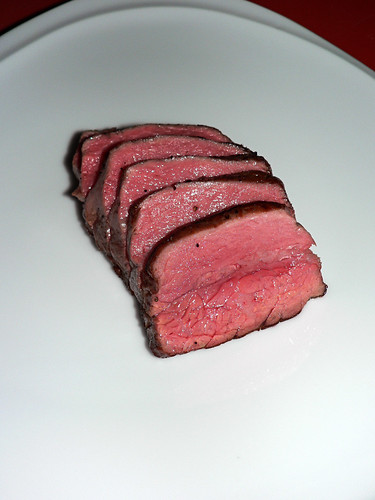
Sirflank cooked at 58 C for 1 hour (you could go for a lower temp but this worked well for my diners, flank part on the bottom half). Finished with high heat in a wok.

Fear not my vegeterian friends. I just finished working on a ricotta dish using Activa TG-K (this binds dairy products) and have started on a tofu dish using Activa-TI for I do not want to leave out my vegan pals either.

Why did I not use Activa YG for my ricotta dish? (I new you would ask that)

Well I'll let AJINOMOTO CO.,INC explain. (somehow I became a German Chef but anyway)


Dear XXXX san,
First, I’d like to confirm that already received samples from you. Thank you very much.
Next, I just got request from customer.
This customer is German Chef; he got information of ACTIVA YG from their friend in EU.
He interested in ACTIVA YG for cheese product, and asks for the information of this product.
I am not sure whether ACTIVA YG is produced in Japan or France, could you check please?
In case that customer would like to test ACTIVA YG, how can I get ACTIVA YG sample?
Thank you very much
Best regards,
Khun xxxx

...........

Khun xxxx
ACTIVA YG is produced in France only.
Regarding sampling of YG to your customer, I don't recomend now. As you know, we don't have approval of YG in Thai-FDA.
I explain background of YG development for reference shortly. We have sold another product (ACTIVA MP) for dairy produts in EU about ten years ago.
But we had a problem. ACTIVA MP does not work well when our customer use non, low or high-temperature pasteurization milk. According to our reseach, non or low-temperature pasteurization milk has inhibitory substance. After that, we developed new application that can control inhibitor. This new application is ACTIVA YG. ACTIVA YG uses reducing agent against inhibitor. If your customer use ultla high-temperature pasteurization milk, you can use ACTIVA TG-K as alternatives of YG. ACTIVA TG-K and MP are same function basically.
I will send ACTIVA YG brochure. Would you please confirm attached file. You can check the basic function of YG.
YG and TG-K are same about usage, dosage.

Bset regards,
xxxx-san

...........

Dear xxxx san,
Good morning.
Thank you very much for your explanation, I understand.
I agree with you that we do not want to pass YG sample to customer because of no Thai FDA approval.
So I will discuss with customer about their application and condition to find out the possibility to apply TG-K.
Thank you very much
Best regards,
Khun xxxx

Fruit salad

Compressed

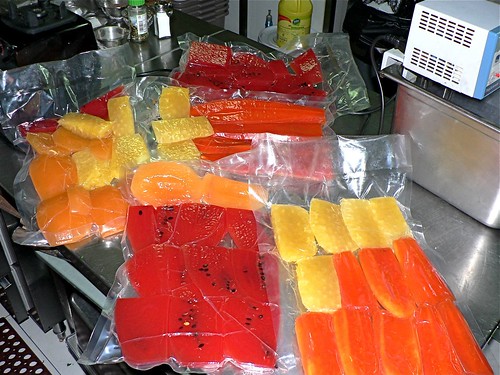
Low Methoxy Pectin and Calcium Lactate will hopefully allow us to stick this fruit together.

Why you ask? Well why not.

But you try to explain to someone who doesn't speak the same language as you about how a bond forms between LM Pectin and a Calcium source .


Thanks to Alex & Aki of course.

Cooking With High Voltage Electricity


Things - Cooking with High Voltage Electricity from Bre Pettis on Vimeo.

Thanks Mandevu!!!! Cheese and grapes....hmmm, high voltage fondue?

elBulli For Dummies

Ferran Adrià NYCPL

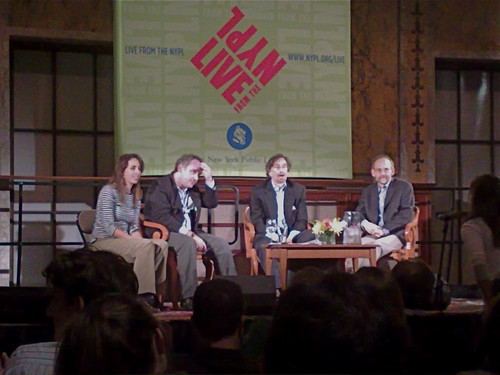
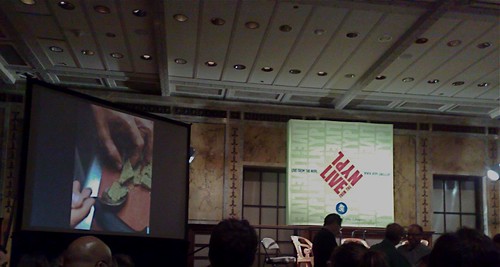
We ended our ten day stay in NYC, by attending an intimate chat with Ferran Adrià. A perfect end to a great food focused week including a day spent experimenting with Alex and Aki and a dinner stuffing our faces at WD-50 (more to come on both of those experiences).

So It was so very sweet of Maytel and Ms Q to indulge me in a nearly two hour inspirational talk held at the New York Public Library in honour of Ferran and his new book. I had said if it was boring that we could just slip out and head for eats earlier than planned.

No slipping needed.

Both Maytel and Ms Q loved it and were both left truly inspired, for me I know a lot about this this man and had heard much of what he had spoken of before from the Joël Robuchon story, and that he and a few others (see chefs statement or Manifesto under Heston Blumenthal) were willing to except the term Molecular gastronomy but not Molecular Cooking.

Maytel loved the comments he made about bread, that bread is just as scientific as cooking with liquid nitrogen but no one calls it "scientific bread". Ferran continued to push the point that El Bulli is a kitchen and not a laboratory as is often believed and one myth that clearly the moderator (slow food guy) wanted to maintain. He stressed that there are no scientists in the kitchen, just passionate chefs that are dedicated to their discipline. I also loved that what Ferran emphasised is the importance of cross-disciplinary dialogue, between not only chemists but architects and engineers. Nonetheless while people ahhh and ohhh over smashed fruit pulled from liquid nitrogen and other equally cool techniques. I was personally inspired or reassured that he was just a chef. A chef who has run with every opportunity that has crossed his path.

I loved that he was nervous to start and then the passion of what he does just over took him. Ignoring stupid questions from fellow panellist (except those of course from Super Nerd Harold McGee -he could have held his own talk by the way). Ferran quietly spoke of his interests and seemed to glow like a proud Dad when pictures of his latest creations emerged upon the large screen, and that most importantly he likes Katz's pastrami sandwiches just like me.
Ferran Adrià NYCPL


In a few days with any luck there should be an audio or hopefully a video cast available here (unfortunately I don't think you can rss this page) but checking back here in the next few weeks should allow you to find a wealth of interesting food discussions during the Restaurant Month at the NYCPL. With talks from Grant Achatz and possibly my favourite topic for a talk ever "A Farewell to Quenelles".
Chilli Evolution

ScienceDaily (Aug. 12, 2008) — If you're a fan of habañero salsa or like to order Thai food spiced to five stars, you owe a lot to bugs, both the crawling kind and ones you can see only with a microscope. New research shows they are the ones responsible for the heat in chili peppers.

The spiciness is a defense mechanism that some peppers develop to suppress a microbial fungus that invades through punctures made in the outer skin by insects. The fungus, from a large genus called Fusarium, destroys the plant's seeds before they can be eaten by birds and widely distributed.
"For these wild chilies the biggest danger to the seed comes before dispersal, when a large number are killed by this fungus," said Joshua Tewksbury, a University of Washington assistant professor of biology. "Both the fungus and the birds eat chilies, but the fungus never disperses seeds – it just kills them."
Fruits use sugars and lipids to attract consumers such as birds that will scatter the seeds. But insects and fungi enjoy sugars and lipids too, and in tandem they can be fatal to a pepper's progeny.
However, the researchers found that the pungency, or heat, in hot chilies acts as a unique defense mechanism. The pungency comes from capsaicinoids, the same chemicals that protect them from fungal attack by dramatically slowing microbial growth.
"Capsaicin doesn't stop the dispersal of seeds because birds don't sense the pain and so they continue to eat peppers, but the fungus that kills pepper seeds is quite sensitive to this chemical," said Tewksbury, lead author of a paper documenting the research.
"Having such a specific defense, one that doesn't harm reproduction or dispersal, is what makes chemistry so valuable to the plant, and I think it is a great example of the power of natural selection."


link

Blogger Templates by Blog Forum