Is Bio Besser? pt.2

Being an expat at large one tends to watch an awful lot of CNN or BBC World Service (but CNN is better these days, have you noticed that?)

We just moved to a new Wohnung, and while putting together new Ikea record shelves today we saw a clip on CNN about Paul Mackey, Whole Foods CEO
.


If you click the link above, you can read a short transcript, but it's better to watch the clip on the site so you can see how shifty Mackey looks when the interviewer asks if it's possible to maintain those original values when you are a big company and shareholders are pushing for profits.

Also amusing are the images of goofy guys spinning pizza dough as he talks about how his business model is built on the imagination of the individual.

Final snipey remark: when she describes Mackey as 'sitting on an organic throne' all I could think was that maybe he'd been eating too much organic Larb.

It's all very well to be so high & mighty about big companies when you are putting together Ikea shelves and about to drill in a Habitat toilet roll holder. These Swedish companies are to the world what Whole Foods may be destined to become once they expand into Europe (they are opening in Kensington, London next... though the one due to open before that I believe is in El Segundo... insert joke about wallet here).

My inner bargain hunter is always at war with my instinct that mass-production should not be trusted (and the hell that is Ikea really underscores that feeling... we got a few nice things that will no doubt fall apart in a year or two and their so-called famous swedish meatballs made me quite sick).
I believe I am the worst kind of hypocrite: I like things to be available and cheap. Therefore I am a cheap hypocrite. And I fell for the old Swedish meatballs trick which also makes me guillable.

And no, I still didn't read Omnivore's Dialemma, but I must!
The Sukiyaki Song

The other day when I was researching hotpot in Thailand I read somewhere that the reason Thai's use the term suki for hotpot is due to a hit song in the 1960s called the Sukiyaki Song that launched a love of hotpot in Thailand. So I did some more research...

"Sukiyaki", known in Japan as "Ue o muite arukō" (上を向いて歩こう "Look up while walking") is a Japanese song that was performed by Japanese crooner Kyu Sakamoto, and written by Rokusuke Ei and Hachidai Nakamura. It is best known under its alternative title "Sukiyaki" in English-speaking parts of the world. The song reached the top of the sales charts in the United States in 1963, and was the only Japanese language song to do so.

The term sukiyaki (which is a Japanese steamboat dish) had absolutely nothing to do with the lyrics or the meaning of the song; the word served the purpose only because it was short, catchy, recognizably Japanese, and more familiar to most English speakers (very few of whom could understand the Japanese lyrics anyway). A Newsweek columnist noted that the re-titling was like issuing "Moon River" in Japan under the title "Beef Stew."

Kyu Sakamoto (pronounced "cue") was one of the 520 people who died in the crash of Japan Airlines Flight 123 near Gunma on August 12, 1985. He was 43. Before the doomed aircraft hit the ground, he managed to write a farewell note to his wife Yukiko Kashiwagi. Married in 1971, they had two daughters, Hanako and Maiko.

A maintenance manager working for the company... committed suicide to "apologize" for the accident
(from Wikipedia)


I had a search and turns out that you really can't get a more globally loved song than this. Here are some of the best covers I found.

- Pizzicato Five who have actually made the song about sukiyaki, soba and yaki udon

- Spanish version

- Another Spanish version

- Pretty Japanese jazz version

- blues guitar version

- Chinese version

- German version, hilarious

- French

- this one's good too

Feijoas and Jesus

Most kiwi kids of my generation (1970/ 1980s) grew up with a fairly ubiquitous set of childhood memories. These were of course the goldens years prior to the neoliberal reforms of Rogernomics,and the prying open of New Zealand to the whims of global capitalism. They were the good old days of state proectionism and monopolies, of Keynsian welfarism, and where it seems childhood memories too, were standard issue.

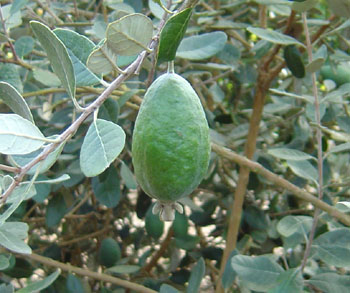
One familiar memory to most is feijoa season in April. Pronounced by New Zealanders as "fee-jo-ah" despite it's South American origins, (it is a guava) most of the kids I knew had a feijoa tree or two in their back yard and we would gorge ourselves most of the season on free feijoas. No one bought feijoas. You left all but the perfect ones to rot on the ground (much to the disgruntlement of talk back radio listeners in the South Island, who would moan on about how spoilt North Islanders were especially Aucklanders at any and every opportunity). But in the North Island where warmer weather prevailed free feijoas were like a birth right.

feijoa.jpg

I miss feijoas. When I first left New Zealand and moved to Melbourne, I was disapppointed to discover that instead of free flowing feijoas, they were instead considered an exotic and luxury fruit sold for $2 a piece. Today the humble New Zealand feijoa (New Zealand is the world's largest feijoa exporter) is now fast becoming a novelty item on the menus of celebrity chefs around the world. Thomas Keller has a feijoa sorbet on his menu. Hock is paying USD $2.70 per feijoa to have them on his menu.

Knowing how impressionable New Zealanders can be (I am one afterall), it is perhaps unsurprising then that despite the fact that feijoas still grow in many New Zealand backyards for free, upscale dining establishments in Auckland are adding this once humble fruit to their dessert menus, and charging for it too.

A while ago my friend told me a story of being in an Auckland restaurant where he ordered the feijoa crumble.

"It's fee-yo-aa" said the waiter stressing the spanish pronounciation of the "j", not "fee-jo-aah".

New Zealand ever more self conscious within the bold new globalised world, has not lost it's propensity for cultural cringe and longing for international sophistication.....despite bringing feijoas to the world

Heesus Christ
Rarely a day goes by where I don't find myself asking "Would MC Hammer eat this?". Thanks to the internet, I can ask Hammer, who is currently in the process of becoming a respectable food blogger with his first in a series of posts on the eating habits of the Hammer family.

Just in case you have lived a Hammer-free existence, here is the MC's paean to happy pants:

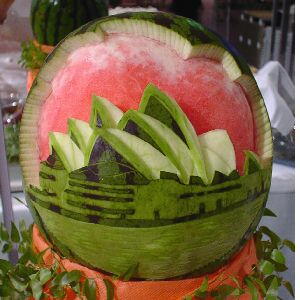
Carved in Fruit

Yesterday I had to go to the mall to get new lenses for my glasses. I had to wait an hour for the lenses, so I went to the food hall and had lunch. I sat and ate a bowl of noodles at a little bench and watched a stall worker cut a cucumber.

Her cucumber cutting skills were prodigious. She carefully peeled the cucumbers, then chopped them perfectly in half, long ways. Then she proceeded to chop the ends and diascard them and then she got to work on dicing perfect cubes.

This got me to thinking about the guy I saw on the boat we took in Phuket to the Similan Islands who perfectly cut a watermelon on a speed boat in rough conditions. He had a technique of chopping that amounted to a perfect pile of appropriately portioned watermelon pieces with just enough rind for holding the melon piece. He also managed to do it without a chopping board while wielding a big knife.

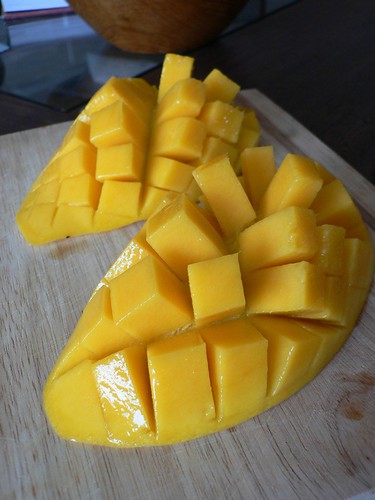
I also thought about a story my friend told me about when she lived in a village for 2 weeks in Cambodia. One day she was chopping a mango and making mango hedgehogs....as below...

Controversial Mango Hedgehog
Mango Hedgehog.JPG

The villagers all came and stood around her and watched and laughed at her, teasing her about the way she cut a mango. It seems that in that village there is only one way to cut a mango correctly and everyone knows it. You peel it first and then slice of the fruit flesh into shards. You do not make a hedgehog.

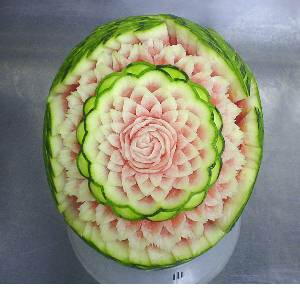
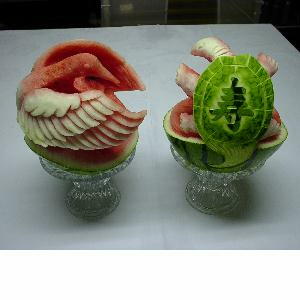
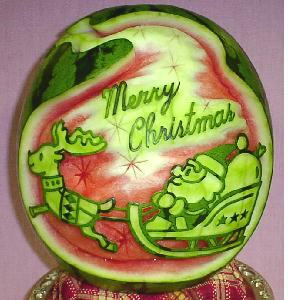
When Hock first arrived in Cambodia he had an extremely difficult time convincing all his new staff not to carve the fruit and vegetables into elaborate shapes such as flowers and birds. It took many months for Hock to drum out their propensity for making carrot birds and tomato flowers.


So I was sitting there watching the girl cut the cucumber and although I don't want to make any gross generalisations, I thought, "man, what's up with Asians and fruit and vegetable chopping?"


img086.jpg

img055.jpg

img094.jpg

img133.jpg

http://takashi64.hp.infoseek.co.jp/page009.html

Water of life


3 am

In Bed

Eau de vie

Vieille Prune

Lorentz

Tres drunk

Sokapeap la'aw

Fried things, a week in review.

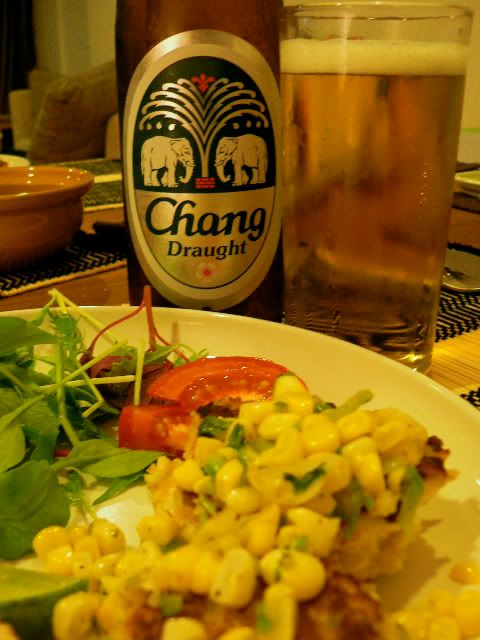
Crab cakes.


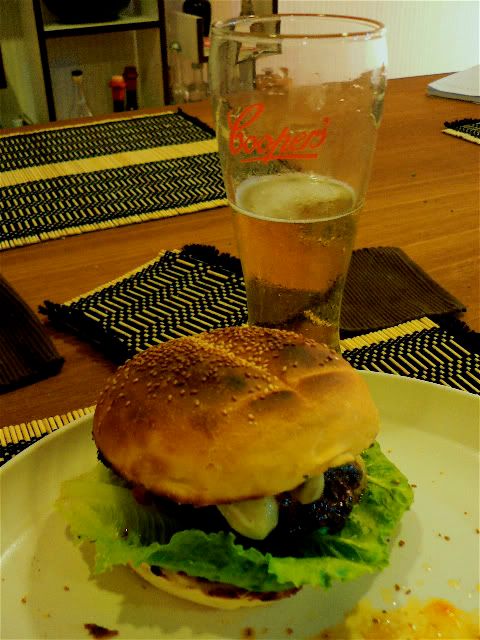
Hamburgers (thank you Maytel).


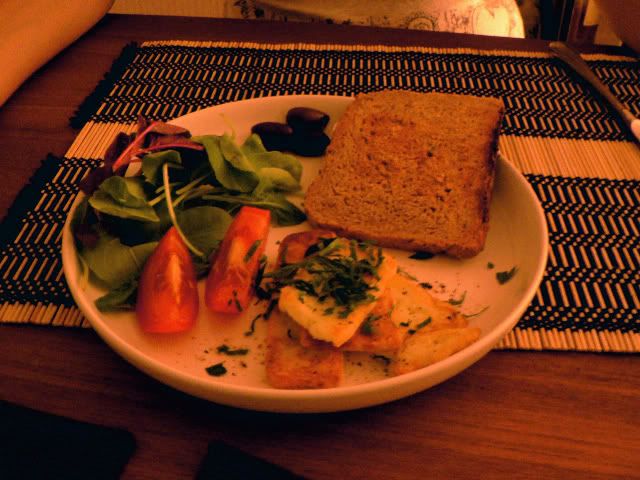
Fried cheese (yummy 2 am snack).


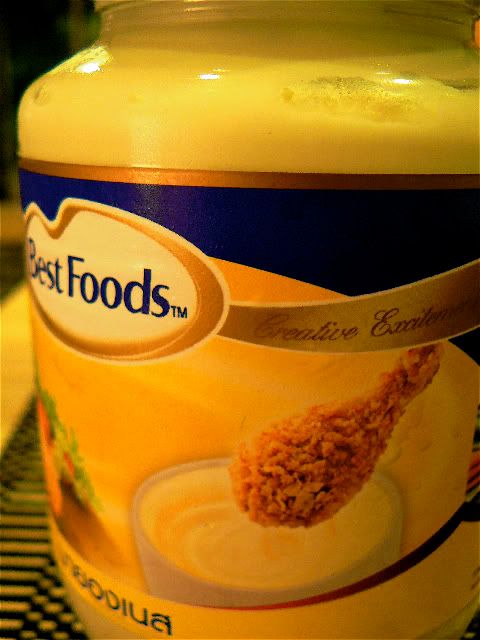
Fried chicken with mayo.


What the fuck!
Photo Sharing and Video Hosting at Photobucket

While half a world away people are eating hard-won, bluesey noodles, up here in Germany the weather is getting milder and every citizen exercises his or her right to lie about on grass and eat cake.

Our friends Ina & Harry moved house recently, to a nice below-street apartment in a grand iron-gated house in Ehrenfeld (name of this inner city area translates as 'field of honour'). The apartment opens onto a garden with fountain and Hansel & Gretel style pines. Pretty private gardens are rare as hen's teeth here: generally either you live in an apartment, or you live in a village. If you can find an apartment with a garden you are the envy of your friends. There aren't really suburbs in the picket fence, rotating metal washing line, pumpkin patch sense.

The nice thing that means gardens aren't an absolute necessity, is the many sprawling and verdant city parks, which people really do inhabit and use. These parks make Cologne a real joy to live in during summer... there are often small beer gardens in one corner where lights are hung from the trees, but generally it's meandering grass and towering trees and people lying everywhere sunning, canoodling or grilling. It's nice to see public spaces properly inhabited like that and also nice to see such enthusiastic use of barbeques. In case of emergency you can get little aluminium foil takeaway BBQs from service stations which contain a metal grating and charcoal briquettes, and on really nice days you'll be darned if you can find a single sausage left in any of the supermarkts.

Any way you look at it, a garden is a treat. I think Ina & Harry spend most daylight & dusk hours in that garden (I would too!). They are tending seedlings for a giant pumpkin which they say will be made into delicious pumpkin jam.

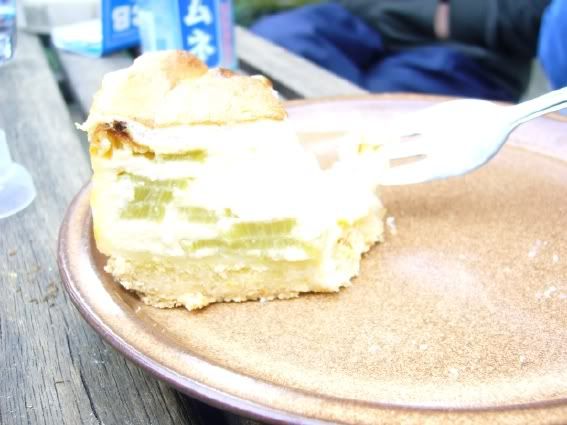
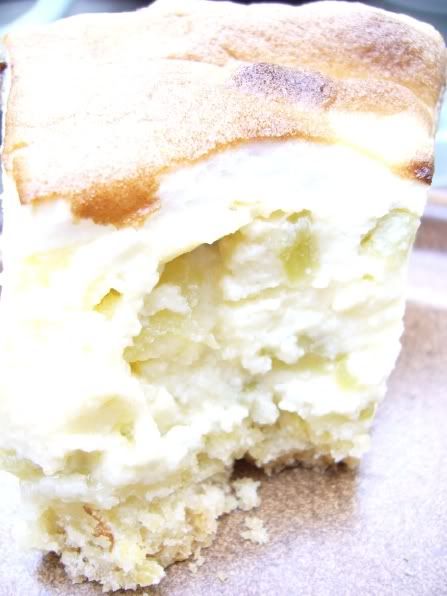
So we visited them on Labour Day for cake and coffee: Ina had made cheesecake with the first crop of rhubarb of the season. Germans are very good at cake! And this cheesecake is really tops, very moissst, maybe because it uses quark instead of cream cheese. Forget every cheesecake you've eaten until now, this is the cheesecake you should henceforth refer to in your cheesecake dreams & imaginings. Really great also because it's really not too sweet.

Photo Sharing and Video Hosting at Photobucket

Ina's Rhubarb-Quark Cheesecake

Base:
200 g flour
75 g butter
75 g sugar
1 egg yolk
pinch salt
teaspoon baking powder

Fruit:
300 g rhubard or other fruit

Filling:
500 g quark
150 g fine sugar
pinch salt
1 packet of vanille puddingpulver or two tablespoons of vanilla pudding powder or good quality custard powder
1 teaspoon of vanilla sugar
1 egg yolk
2 eggs
1/2 liter milk
a little squeeze of citrus juice
1/2 cup of olive oil

Baiser meringue crust:
2 egg whites
4 tablespoons fine sugar


Knead the butter and egg into the base ingredients. Grease a springform
cheesecake pan, and spread the cake-base mix over the bottom.

Cut the rhubarb very finely and spread it over the base. (You could use other fruit like pear or cherries, and you could also spread a little ginger conserve or other jam).

Mix the filling ingredients well and pour over the top.

Bake at 200 degrees for 45 minutes. (Not finished yet!)

Prepare the 'baiser' meringue topping by beating the egg whites stiffly and folding the sugar into them. Spread on top of the cake and bake for another 10-15 minutes. This baiser topping is very thin and just gives a great spongey chewy texture to the top of the cheesecake.

Cool the cake and then put it in the fridge for at least two hours before serving at room temperature.

Best served in a magic garden.

Photo Sharing and Video Hosting at Photobucket

Photo Sharing and Video Hosting at Photobucket

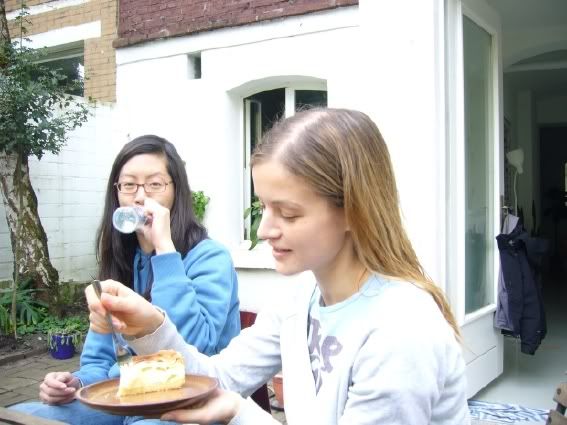
That's the chef on the left drinking 'Ramune' japanese lemonade.

Photo Sharing and Video Hosting at Photobucket

Noodle Exchange

When I was doing field work in Cambodia last year I travelled around a lot in big white four wheel drive landcruisers with Khmer project staff. We generally listened to Khmer music. The older Khmer guys loved listening to a form of Khmer folk music called "talking the blues". It has a Southeast Asian country style to it. Occasionally, they show the music on Bayon TV. It's usually 3 people, a couple of old timers guys and a woman. One plays the Chapei Dang Veng (long neck guitar). They'll talk/sing and intermittently stop for the audience to holler out "Ja ja" or "Bart bart bart" (female and male forms of yes in the Khmer language) - its a bit like when you listen to a live Curtis Mayfield album and the audience yells out in the background "I hear you brother"

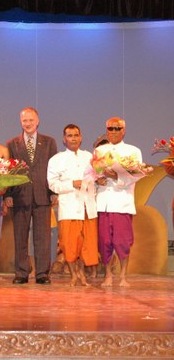
The guy pictured below is considered to be the foremost virtuoso of singing the blues in Cambodia. He is known in expat circles as the Ray Charles of the Khmer blues (I tried to find some online but no luck).

suon penh.jpg

Anyway, on one particular occasion, we were travelling to Prey Veng and listening to some Khmer blues and I asked my Khmer colleague "what is this song about?" (my Khmer isn't that good). Knowing the history of the country, of the killing fields and of the Khmer Rouge, American cold war bombing and repeated invasion and civil war, I expected the response to be about a tale of incredible suffering and hardship. If anyone has cause to sing the blues I thought, it's the Khmers.

"The song is about a man who bought some noodles, from his friend. The noodles are not good. And so he doesn't know what to do. He doesn't know if he should take the noodles back and risk upsetting the friendship or whether he should just keep the noodles. The noodles were expensive and his friend promised him they were great, so now he sings about his worries"

"oh"

And that's when I realised that the appeal of the blues is not to relive horrific events in one's life or the history of the country, but to talk and settle the ethical and moral problems of everyday life and relationships. How to deal with friendship relations and trade, what to do if your sold a bad bunch of noodles.

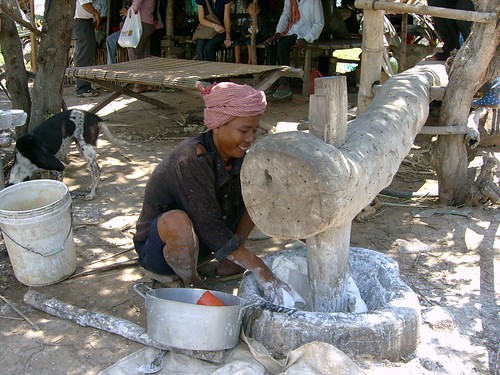
Contrary to common perception noodles are not native to Southeast Asia. Instead they were bought to Southeast Asia by successive waves of Chinese immigrants moving, trading and settling in the region. Rice noodle making as pictured below is labour intensive. It takes about 1 hour of pounding this rice and water mixture to get a kilo of noodles that are sold for about 1000 riel or $0.25. At the other end of the pole 2 small children peddle the log to pound the noodles. Generally most Cambodians make noodles only for the new years, which I think is another tradition picked up from the Chinese. Chinese serve noodles in the new year as they signify longevity.

Chief village noodle maker.jpg

I found generally that in-village noodle making occured in denser villagers with more spare labour and more often in villagers closer to townships. More noodle machines were spotted in villages closer to Vietnam also, where the ubiquitous pho noodle reigns supreme. (This was just my noodle observations, they may not be true).

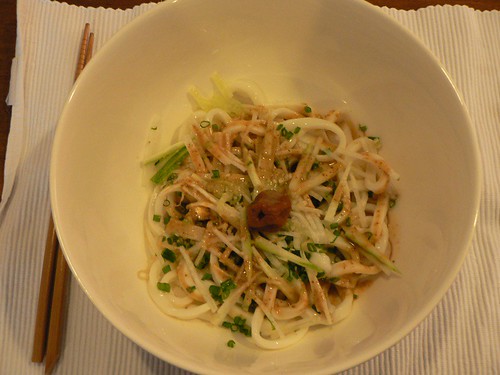
But despite the fact that noodles are not indigenous to Cambodia, this is where I picked up a recipe for one of my most favourite at home noodle dishes. I got the recipe from the owners of my favourite Japanese restaurant in Siem Reap where I often went to dine on their Umeboshi Cold Udon. Luckily I never once was faced with the dialemma of being served bad noodles.

Cold Umeboshi Plum Udon Noodles Recipe for 1 - 2 people

P1090061.JPG

Udon noodles (portion per person)*
Japanese Sesame Dressing
Spring Onion chopped
Daikon raddish (cut into batons)
Cucumber (cut into batons)
Ginger (cut into batons)
Umeboshi Plum

Japanese Sesame Dressing
You can buy this at the store or you can make it yourself. I usually just buy the dressing and then beef it up a bit.

- sesame paste 2 tblspn or so
- sesame oil couple of drops
- minced ginger (1/2 tspn)
- minded garlic (1/2 tspn)
- wasabi paste (little blob)
- mushed up umeboshi
- garlic powder
- sesame seeds whole
- japanese rice vinegar
- little bit of honey or sugar


Boil udon until cooked and plunge into ice cold water. Arrange batons of veges and sprinkle over spring onion. Top with an umeboshi plum and serve with sesame dressing

* You can use cold soba or somen too

BBQ Rib Porn

This one's for you Phil


Online Videos by Veoh.com

Number 1 from an endless series.

A commercial sized smoker, purely devoted to pork ribs - One day I will need to cook pork ribs for 40 to 100 people, and quite thankfully, my partner agrees that owning two barbecues and a dedicated rotisserie is not enough. As a nation, Australians are brilliant at the act of barbecuing and our national holiday is ostensibly devoted to it rather than something more controversial, like invasion by white people. However, Australians tend to be poor at cooking barbecued food. We have the heart for barbecue but not the palate. We rarely even barbecue heart. We’re a nation of grillers rather broilers or smokers. I’m a firm believer that a well-placed smoker can change the world.

Note: Pictured commercial smoker is Ole Hickory Pit's Model SSO-SSI, boasting a cooking surface of 144 square feet and cooking capacity of 216 sets of baby back ribs.

Burning Ring of Fire

This week's food song, is the song I always sing in my head as I regret the previous evenings scorchingly hot Thai meal.

Most painful is the days after having eaten here.

Image0001 copy.JPG

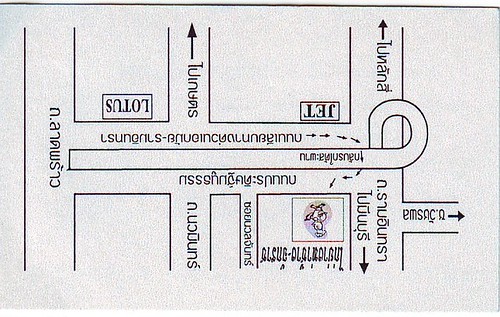
It is my favourite Isaan restaurant in Bangkok. Isaan is the poorest region of Thailand, but it is also in my books, the yummiest. If you like larb, the Thai spicy salad made with ground chicken, beef, duck, or pork - then you like isaan food. Other famous Isaan dishes are: bbq chicken with spicy roasted rice chili, salt baked fish, and som tum (papaya salad), all served of course with sticky rice.


Image0001-1.JPG

If you are ever in Bangkok, print off this card and show it to a taxi driver. By any luck you will be driven deep into the Thai suburbs. Before you journey too deeply along the congested suburban highways and into the territories of Thailand's burgeoning middle class suburban fantasies and gated communities, you should hit a main road that is dominated with enourmous towering restaurant/beer gardens. Most of the architecture will be a type of faux log cabin, with flashing neon crabs and fish rather than neon cowboys signs. At some point you will get to a roundabout and near to this roundabout is a small restaurant. It's not much to look at but the food is outrageously good. There is absolutely no english and no english speakers work there. But there are photos and so you can point and gesture to your mouth. I usually go with my Dad for fear of getting lost. Once my Thai improves (I start lessons this week) I'll be braving the traffic alone. It's a meal worth crossing town for (so long as you have nothing much to do the next day but stay close to a bathroom and hum quietly in your head "and I went down down down in a burning ring of fire")


Online Videos by Veoh.com
MySpace Codes


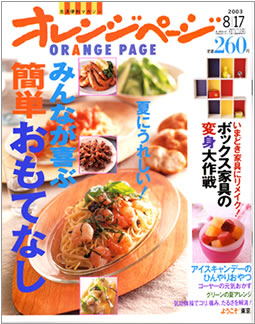
If you have the disease where you like to eat different things all the time, monthly Japanese home-maker's magazine Orange Page is a useful solution since many of the recipes are quite simple preparation-wise and have some very good inventive combos of Japanese and Western style cooking... like endless varieties of wiener-asparagus-egg dishes (at least one per issue).

Nothing funny to say about it really but here's a 'simple soup' I pulled out of last month's Orange Page, you'll love it.

Simple Soups: Broccoli Bacon Soup (serves two)

1/2 broccoli head cut into bite sized florettes
3 strips of bacon with most fat removed & cut into 3cm pieces
1/2 red onion cut into slices
2 cups of water plus a teaspoon of high-quality western style stock powder (I used half a sachet of kombu stock powder and a quarter of an organic vege stock tablet, but guess two cups of good chicken stock or whatever would be even better)
2 tbsp olive oil
salt & pepper
parmesan

Saute the onion and bacon in the olive oil, then when cooked but not too browned, add the broccoli and saute for about a minute. Add the stock & water and simmer until the broccoli is as tender as you like it. Reduce the heat and if necessary skim off any fat. Add lots of freshly ground black pepper and if necessary a little sea salt. Serve and grate a scant tablespoon of parmesan over each bowl.
Later if I can be bothered I'll scan a picture from the magazine so you will be convinced of how yum this actually is!
Erik says it's now his 'lieblings suppe'

MySpace Codes

Dr Bread with Conan

I miss good bread. Bread makers in Thailand follow the general conception that the whiter, sweeter and spongier the better. I call it Japanese-style bread. Cambodian bread is marginally better, it has a crust at least. Overall I've noticed that in keeping with the southeast asian general perception that anything dark is bad and anything white and fair is good, one almost never sees a well baked loaf of rye bread. My step-mother has taken the asian browned bread phobia to a whole new level. As she believes that anything slightly burnt contains cancer causing carcinogens, after toasting her bread in the morning she then proceeds to pick off any pieces that fall above the hue of honey coloured. It is a painful sight to see

I miss vogels and crusty loaves of ciabatta.

Why we don't drink pigs milk

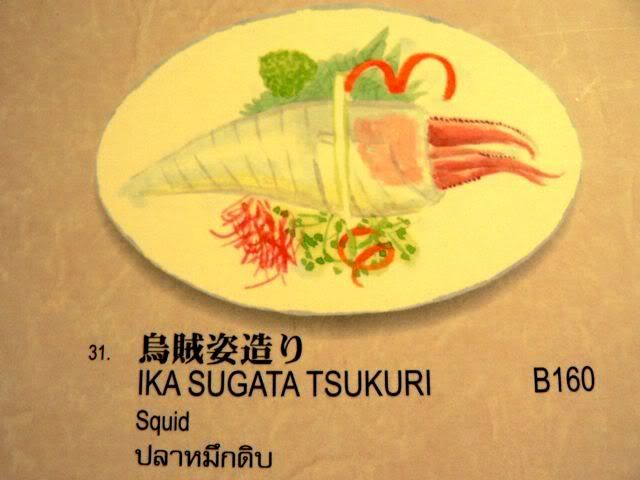
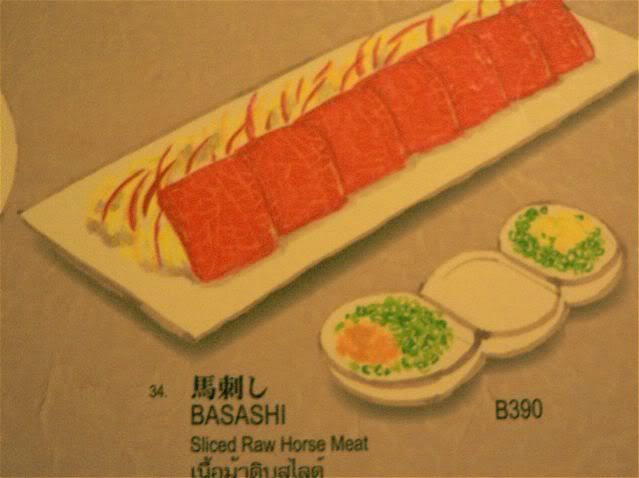
The food sucked this weekend in Bangkok (well all the places we went to anyway, mostly because everyone was on holiday). The only good thing to come out of our dining experiences was some cute hand drawn images that appeared on one the menus at one of the three restaurants that we wasted our money at. So I am back to stealing food related crap off the internet.


The B stands for Baht not BILLIONS of dollars

I have eaten donkey sausage but not horse sashimi like some. Again, sorry Packet Foodie.


Anyway that brings me to why we don't drink pigs milk (or make cheese from pigs milk etc.)

I am not sure if I mentioned here at GF before that I don't have a TV and that during quieter moments I find myself in obscure parts of the internet usually somehow food related.

Anyway the following is a writing from a website where the author Guy loves to write to companies asking bullshit questions (interestingly mostly written in the early 90's before the web went mainstream).

Guy writes:

Illinois Pork Producers' Association
6411 South 6th Street Rd
Springfield, IL 62707-8630

Gentlemen:
Each day as I sit in the diner opposite my house, eating my bacon and drinking my milk, I wonder: why don't we drink pig milk?Pork is such a natural and essential part of life. It gives us ham and bacon, spam and red-hots, pork chops and lard. But whereas cows give us so many delicious meat products, they also provide us with dairy. Pigs are mammals too. They lactate, don't they? Why don't we harvest it? Does their milk taste bad? It is toxic? Is it simply unattractive, perhaps an opalescent brown-green that blinds all to its delicious flavor? Is it hard to milk a pig? Do they produce enough milk to make it worthwhile? Is it too viscous or thin to be of any industrial or domestic use? Can you make cheese from pork milk? Or yogurt? Or butter? Can you cook with it? Make pasta sauce, or use the cream in fancy coffee drinks?

As you can see, I have lot of questions about pork dairy potential. It's a topic I don't know much about. But I want to, because I'm sure that there's a good reason for the way things are, and I'm curious about it.

Please write me back and let me know why such a potentially lucrative and delicious resource has not yet been tapped.

Thank you very much.

Guy Petzall.


Guy Petzall
1949 Henderson
Chicago, IL 60657

Dear Guy:
I was excited to hear that each day you sit down to a meal of bacon, because today's pork products are 31% leaner than they were ten years ago. Pork is delicious and very healthy as many physicians recognize it as a very important source of protein. But the opportunity they present to the dairy industry is very limited.

Porcine do lactate and their milk I will assume would taste great, because it is made of 8.5% fat in relation to the fat that makes up 3.5% of the components in cows milk. The other components such as lactose and water are found at nearly the same percentages in pig's milk. However, pigs will on average produce 13 lbs of milk in a day as compared to cows that produce 65 lbs of milk on average per day. Pigs unlike cows cannot become pregnant while lactating and therefore possess a severe economic problem to producers. whfle pigs consume less feed per day, economics does not allow pigs to be a viable source of dairy products.

The biggest challenge facing the porcine dairy industry is collecting the product. Pigs on average have fourteen teats as opposed to cows that have four teats. Pigs also differ from cows in their milk ejection time, a cows milk ejection is stimulated by the hoimone oxytocin and can last ten minutes, where as a pig's milk ejection time only last fifleen seconds as the suckling pigs stimulate the release of oxytoc in. The technology of a 14 cupped mechanized milking machine that can milk a pig in 15 seconds is not available to pork producers.

I hope I have answered your questions and I encourage you to think about developing a pig milking machine as you eat your bacon in the fixture.

Good Luck

Bradley Wolter

Pork Quality Assurance Intern

Blogger Templates by Blog Forum